
Cryptocurrency Prices by Coinlib
Bull Flags vs Bear Flags in Crypto

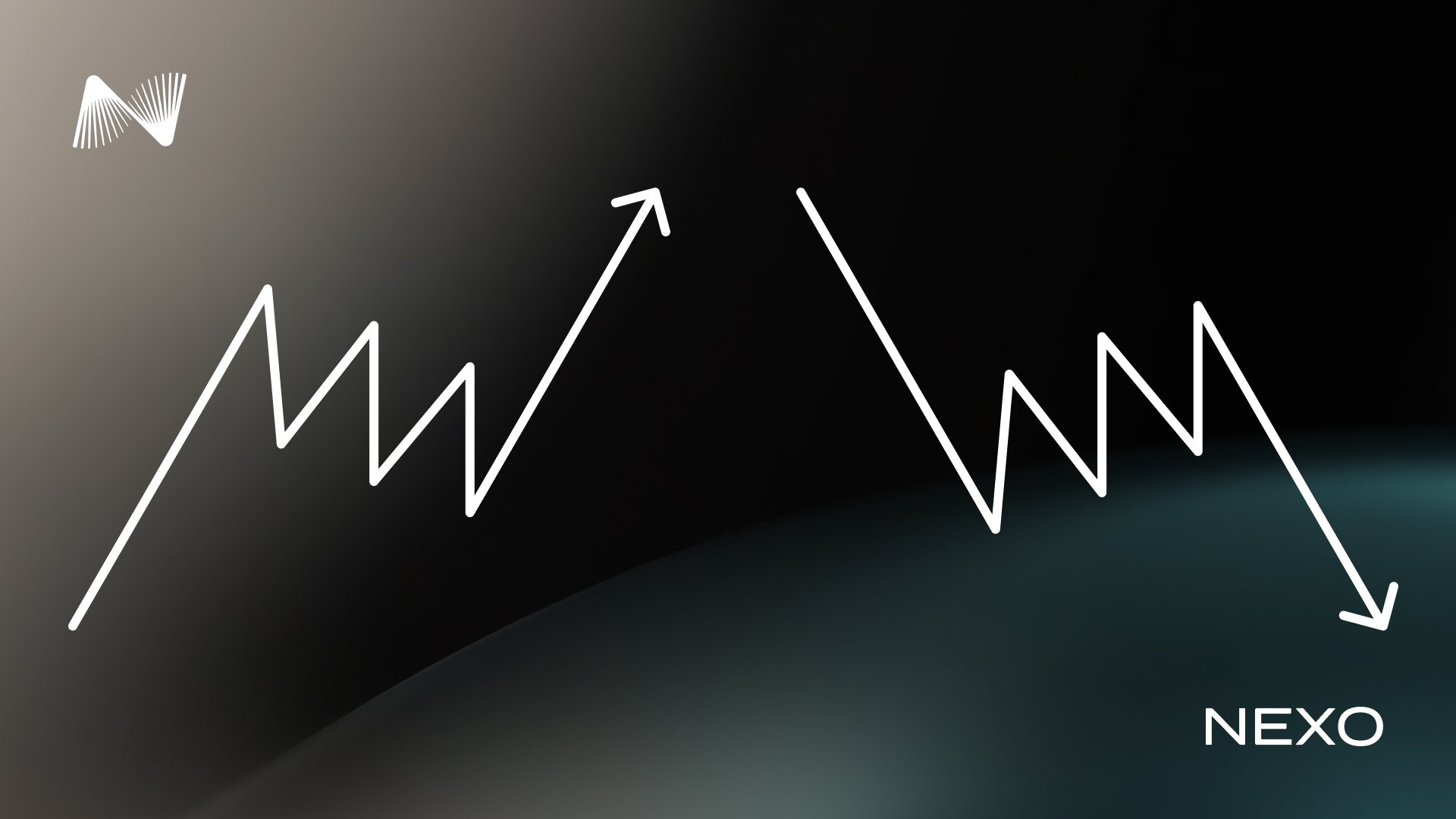
Bull flags and bear flags are chart patterns that merchants search for when making an attempt to know if a development may proceed. A bull flag seems throughout upward momentum, whereas a bear flag seems throughout downward momentum.
They don’t predict the long run — they supply construction at a time when persons are not sure whether or not the market is popping bullish, cooling off, or nonetheless caught in a broader downtrend.
If you happen to spend any time on social feeds, the controversy:
Are we in a bull market? Has it already peaked? Are we sliding right into a sluggish bear section?
The reality is, crypto hardly ever provides clear solutions in actual time. However these patterns provide help to perceive what the market is doing right now — not what it “ought to” do.
Flags provide you with:
- A approach to learn development energy.
- A easy construction for understanding pullbacks.
- A calmer perspective when the value chops sideways.
This makes them helpful whether or not you’re newer to buying and selling or already snug studying charts.
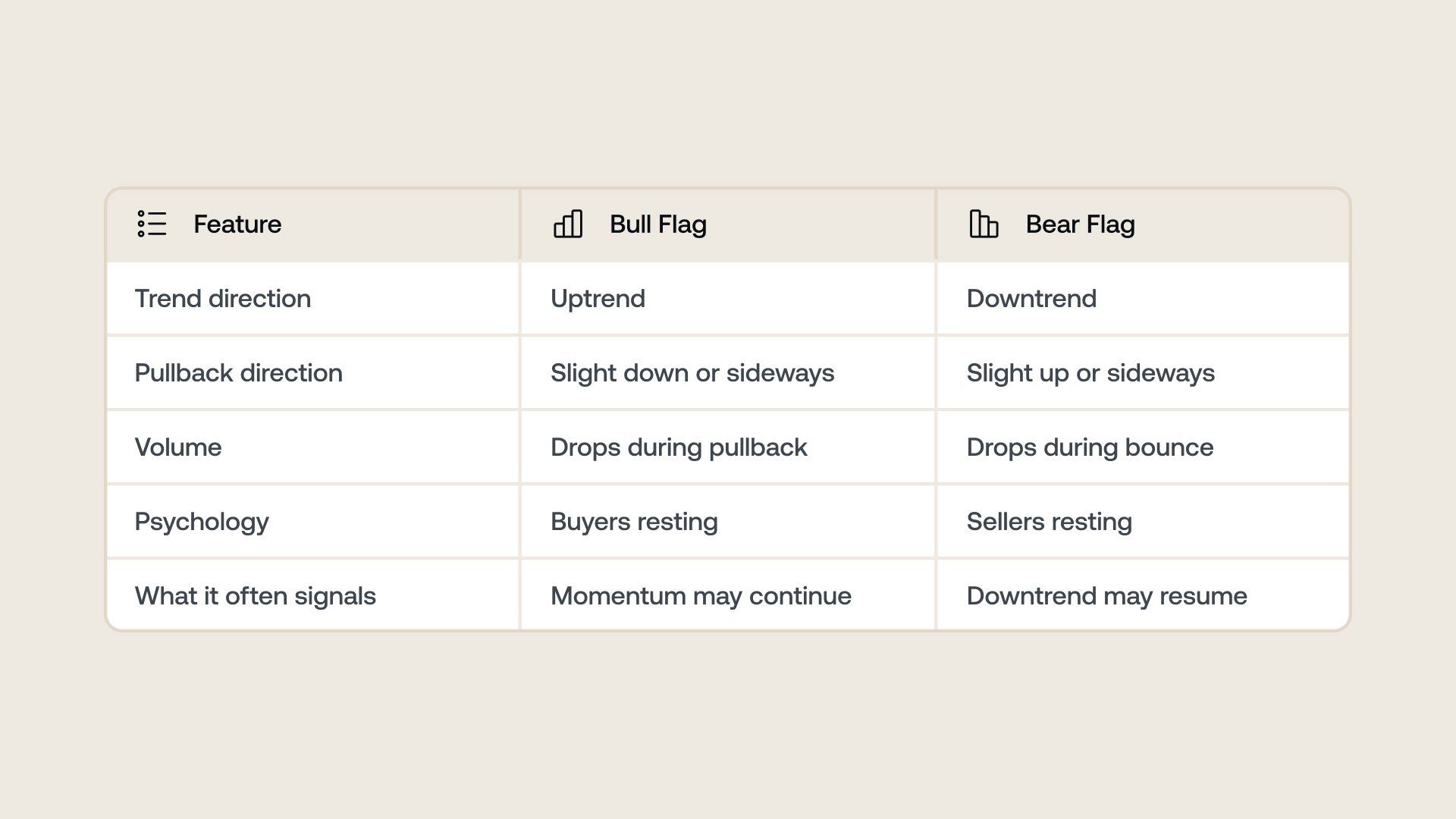
A bull flag seems when the market strikes up shortly, then takes a breather with out reversing.
Consider it like a quick uphill run adopted by a brief relaxation — however the route hasn’t modified.
The pole (the quick transfer).
It is a sturdy leap in value.
- Often sharp and energetic.
- Typically backed by excessive buying and selling quantity.
- Exhibits sturdy purchaser curiosity.
The flag (the remaining).
That is the small pullback that follows.
- Drifts sideways or barely downward.
- Lowers in quantity.
- Typically lasts just a few days or even weeks, relying on the timeframe.
After a giant transfer, merchants take revenue, lengthy positions reset, and the market “cools down” with out breaking construction. When value breaks above the highest of the flag, merchants deal with it as an indication that patrons could also be able to push once more.
You’ll usually hear merchants say, “the pullback held the 38.2% Fibonacci degree.” Right here’s what which means:
Fibonacci ranges are frequent retracement factors — percentages merchants use to guess how deep a standard pullback may go. 38.2% merely means the value pulled again lower than half of the unique transfer — an indication the uptrend should be sturdy.
It’s merely a device to measure “how deep was the dip?”
A bear flag is similar sample however flipped. As a substitute of a robust climb and a mild pullback, it’s a robust drop and a weak bounce.
The pole (the quick sell-off).
- Sharp downward transfer.
- Excessive quantity.
- Pushed by concern, liquidations, or unfavourable sentiment.
The flag (the weak bounce).
This half catches many learners abruptly — it seems like restoration, however it isn’t.
- Value drifts upward slowly.
- Quantity is low.
- Patrons don’t look dedicated.
Why does it matter?
Bear flags usually seem throughout uncertainty. They'll occur even when social sentiment is bullish. In downtrends, these “little bounces” are sometimes pauses earlier than sellers return. A breakdown under the flag’s decrease boundary alerts development continuation.
Crypto proper now sits in a well-recognized place: sturdy strikes adopted by doubt. Some belongings get away. Others lag. Sentiment shifts shortly.
Flags shine in these moments as a result of they reduce via the noise:
- As a substitute of asking, “Is that this a bull market?”, you ask:
“Is that this development nonetheless wholesome?” - As a substitute of asking, “Is that this a bear market?”, you ask:
“Are sellers nonetheless in management?”
This reframes uncertainty into one thing readable and calm.
Understanding bull and bear flags provides you a clearer view of the market, particularly when sentiment shifts shortly.
Many traders choose to remain positioned throughout these phases whereas maintaining their method versatile — for instance, earning interest on assets during quieter periods or accessing liquidity without selling when alternatives come up.
If you happen to’re newer to charts:
- Consider bull flags as managed dips in sturdy tendencies.
- Consider bear flags as weak recoveries in downtrends.
- You don’t want to attract good strains to see the overall form.
- You don’t have to memorize all indicators — value construction tells the story.
Flags provide help to see the market with much less stress.
1. Take a look at the larger development
Flags are continuation patterns — they work higher when the upper time-frame helps them.
2. Verify quantity.
Quantity exhibits how many individuals are literally buying and selling throughout a transfer.
- In a wholesome bull flag, the pullback normally occurs on decrease quantity. This implies fewer sellers are energetic, and the market is principally pausing reasonably than reversing.
- If, in the course of the pullback, quantity all of the sudden will increase, it may possibly imply sellers have gotten extra aggressive. That’s an indication to watch out, as a result of stronger promoting can break the sample.
Consider a pullback because the market taking a quick pause earlier than it might proceed in the identical route. Pullbacks occur as a result of merchants take earnings or the market merely wants to chill off after a quick transfer.
3. Look ahead to fakeouts
A fakeout is when the value briefly strikes exterior the flag sample — both above or under it — after which snaps again inside. This usually tips merchants into considering a breakout or breakdown has began.
Crypto does this rather a lot as a result of it’s a extremely liquid and quick market.
4. Perceive invalidation
Invalidation is the purpose the place a sample stops making sense.
For flags, the sample is invalidated when value breaks in the wrong way and stays exterior the construction.
This tells merchants, “The setup didn’t maintain,” to allow them to reassess calmly as a substitute of reacting emotionally.
5. Preserve danger small throughout unsure durations
Flags provide help to perceive how a development is behaving, however they don’t assure what occurs subsequent.
Markets usually look clear proper till they don’t — particularly throughout transitions between bullish and bearish circumstances. That’s why merchants maintain their place sizes smaller when the market feels unclear.
For extra skilled readers:
- Open curiosity: Rising open curiosity throughout consolidation can gasoline continuation.
- Funding charges: Excessive funding can flip a superb flag right into a entice.
- Liquidity pockets: Flags have a tendency to interrupt towards concentrated stops.
- Market breadth: Sturdy flags seem when a number of belongings transfer in sync.
Regularly requested questions.
1. What's a bull flag in crypto?
A bull flag is a sample that varieties in an uptrend: a pointy rise adopted by a small, managed pullback. Merchants watch it to see if patrons nonetheless have momentum. When the pullback stays shallow and quantity drops, it usually alerts that the uptrend might proceed, however it’s by no means a assure.
2. What's a bear flag, and the way is it completely different from an actual restoration?
A bear flag begins with a robust drop, adopted by a weak, low-volume bounce. It seems like a restoration, however patrons aren’t exhibiting energy. If the market breaks down from this construction, it suggests sellers should be in management.
3. How are you going to inform if a pullback is a bull flag or the beginning of a reversal?
Bull-flag pullbacks are shallow, low-volume, and transfer in a good channel. A reversal normally has sharper promoting, rising quantity, or breaks under key help. Checking the upper time-frame helps make clear the distinction.
4. Why do bull and bear flags generally fail?
Flags fail when broader circumstances overpower the sample. This might embody shifts in sentiment, sudden information, or an imbalance in leverage. A bull flag failing means patrons misplaced energy. A bear flag failing means sellers stepped again.
5. How do merchants use quantity to verify a flag?
Throughout a bull flag, quantity normally drops because the pullback varieties and rises once more on a breakout. In a bear flag, quantity falls on the weak bounce and will increase if the value breaks down. This helps present whether or not momentum aligns with the development.
6. How does Fibonacci assist when studying flags?
Fibonacci ranges assist measure how deep a pullback is. Staying above the 38.2% retracement usually helps a bull flag. Weak bounces that may’t attain the 38.2%–50% ranges usually align with bear flags. It’s merely a device for gauging development energy.
7. Are flags helpful in right now’s unsure crypto market?
Sure. Whether or not the broader cycle is bullish or bearish, flags assist learn short-term energy. Bull flags showing usually sign that patrons are energetic. Bear flags showing present sellers nonetheless dominate. They simplify development studying with out predicting outcomes.
8. Are flag patterns useful for learners and intermediate merchants?
Inexperienced persons use them to acknowledge pullbacks and keep away from panic throughout dips. Intermediate merchants use them with quantity, funding, and liquidity knowledge. Each profit as a result of flags present construction when markets really feel unclear.
9. Do flags seem in each bull and bear markets?
Sure. The first distinction is route: bull flags seem during times of upward momentum, whereas bear flags seem during times of downward momentum. Throughout transitions—like elements of right now’s market—each can seem whereas development route is being examined.
The content material of this text is meant solely for basic informational and academic functions. It doesn't represent and shouldn't be relied upon as monetary, funding, authorized, accounting, or tax recommendation, or as a suggestion to purchase, promote, or maintain any cryptocurrency or different monetary instrument. Buying and selling and investing in digital belongings akin to Bitcoin and different cryptocurrencies are inherently speculative and contain a considerable danger of loss. All the time do your personal analysis and seek the advice of a professional skilled earlier than making any monetary selections.