Cryptocurrency Prices by Coinlib
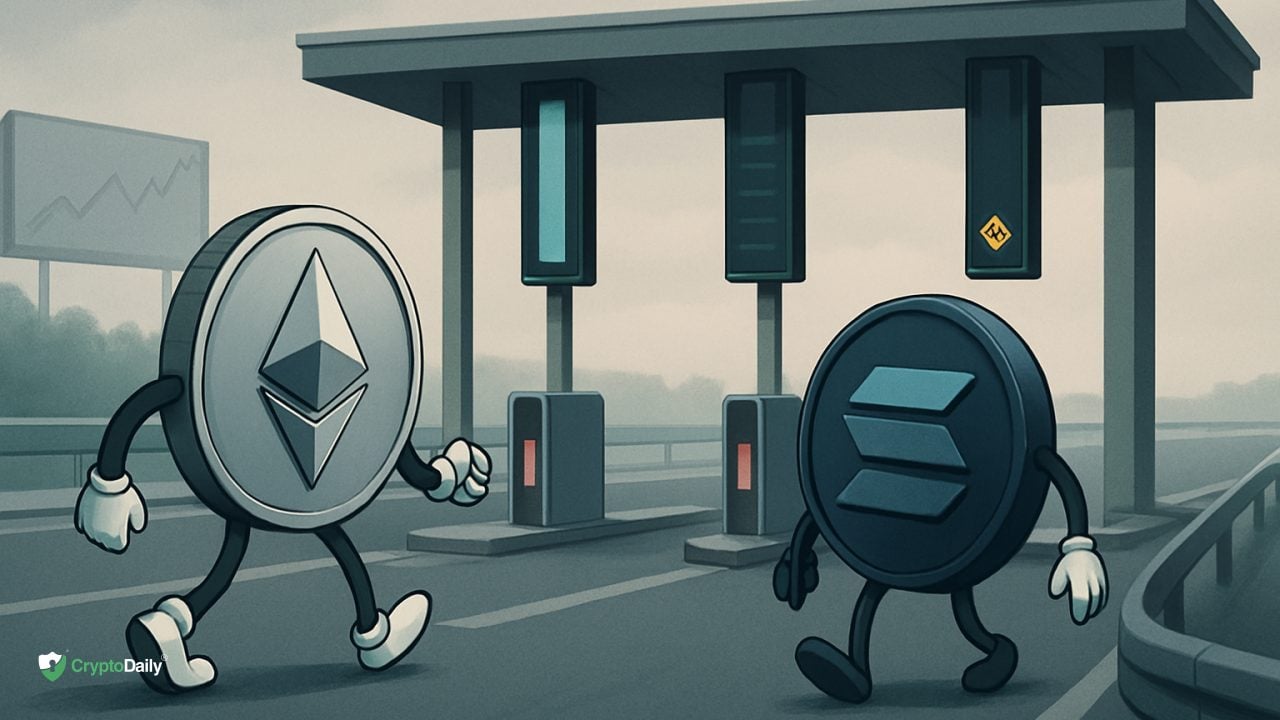
ETH vs SOL vs BNB: Who Has Actual Payment Demand Now?

Charges inform the reality when narratives don’t. In a aid bounce, headlines chase costs, however sustained payment fee reveals the place customers really transact, speculate, or construct. This piece unpacks how Ethereum, Solana, and BNB Chain stack up on actual payment demand proper now.You’ll see what the newest payment snapshots indicate, how every community’s design steers who pays and who earns, and why “charges paid” can diverge from “chain charges.” We’ll additionally flag pitfalls that distort alerts and supply a sensible guidelines to keep away from unhealthy reads.No hype—only a clear framework to interpret payment information so you'll be able to resolve which ecosystems warrant consideration as circumstances evolve.Throughout the aid bounce, Ethereum continues to command the biggest headline charges whereas Solana reveals robust app-level monetization and BNB Chain demonstrates sturdy retail throughput at decrease absolute payment ranges. Based mostly on the newest snapshots, Ethereum stays the benchmark for uncooked payment spend, Solana interprets exercise into notable protocol-side payment seize, and BNB Chain’s power is broad, lower-cost utilization that also generates materials chain income.What does “actual payment demand” really imply on ETH, SOL, and BNB?“Actual payment demand” is constant, non-subsidized spending by customers and bots to entry blockspace for functions that matter to them—buying and selling, minting, arbitrage, gaming, funds, or governance. It’s not only a spike on one chain day; it’s patterns that persist throughout weeks and market regimes. The cleanest proxy is whole charges paid, however nuanced readouts require extra context.DefiLlama surfaces two key metrics on chain pages: “Charges Paid” (what customers collectively spend) and “Chain Charges” (what the chain/validators finally seize after burns, refunds, or different mechanics). On the newest snapshot, Ethereum reveals $6.46M in 24h “Charges Paid” with $154,065 in “Chain Charges,” whereas Solana reveals $4.87M and $292,200, and BNB Chain reveals $1.22M and $306,483 respectively (DefiLlama (Ethereum chain web page), DefiLlama (Solana chain web page), DefiLlama (BSC / BNB Chain web page)).These figures aren’t apples-to-apples profitability metrics, however they assist separate uncooked demand (charges customers can pay) from protocol-side seize (charges that accrue to validators/chain after burns or payment splits). A series can have excessive “Charges Paid” but modest “Chain Charges” if its payment mannequin redirects worth (e.g., burning) or if a lot exercise happens in apps that seize charges themselves.Did the aid bounce change who pays—and who earns—on every chain?Sure, however in chain-specific methods. The bounce reactivated speculative movement, and every community’s stack directed the place the charges landed. On Ethereum, headline “Charges Paid” remained dominant, reflecting each premium blockspace for high-value transactions and ongoing mainnet use alongside rising L2 adoption. The comparatively small “Chain Charges” vs “Charges Paid” aligns with Ethereum’s burn mechanics and worth routing throughout rollups.Solana’s current run confirmed that when exercise heats up—notably in buying and selling, NFT mints, or high-throughput methods—app-level payment seize might be significant. The 24h snapshot with $4.87M in “Charges Paid” and $292,200 in “Chain Charges” suggests customers had been prepared to pay to transact, and a non-trivial slice accrued on the protocol aspect, even with low unit charges (DefiLlama (Solana chain web page)).BNB Chain continued to shine on breadth: decrease charges per transaction however substantial combination utilization. With $1.22M in “Charges Paid,” $306,483 in “Chain Charges,” ~503k transactions, and ~89k energetic addresses in 24h on the time of the snapshot, the chain’s retail tilt and in depth dapp ecosystem generated actual, if extra diffuse, payment strain (DefiLlama (BSC / BNB Chain web page)).How do payment fashions and throughput form prices and income seize?Design decisions decide how charges behave below stress. Ethereum’s EIP-1559-style mannequin burns the bottom payment; precedence ideas and MEV seize can go to validators or exterior actors relying on setup. Rollups introduce one other layer: a bit of person charges first accrues to L2 sequencers, whereas calldata prices and bridge interactions anchor some worth again to Ethereum.Solana prioritizes throughput and quick affirmation. Localized payment markets and precedence charges assist value rivalry on the account or program stage, making congestion extra granular than chain-wide spikes. BNB Chain usually targets reasonably priced gasoline with real-time BNB burns (by way of BEP-95) sharing worth between token economics and validator economics.
Facet
Ethereum
Solana
BNB Chain
Payment mechanism
Base payment burn (EIP-1559 model) + ideas; L2s deal with most retail movement
Precedence charges + localized payment markets; granular congestion pricing
Low-cost gasoline with ongoing BNB burn (e.g., BEP-95) and validator seize
Throughput orientation
Safety-first L1; scale by way of rollups
Excessive throughput on L1; parallelism and scheduler optimizations
Excessive-capacity EVM setting for broad retail utilization
Worth routing
Burn reduces provide; L2s accrue person charges; calldata ties again to L1
Validators seize precedence charges; apps typically monetize order movement
Validators seize charges; protocol burns help token economics
Noticed sample in bounce
Prime “Charges Paid” headline; modest “Chain Charges” vs whole
Robust payment spend with notable protocol-side accrual
Decrease unit charges however broad utilization produces materials chain income
None of those fashions is “right” in isolation. They mirror trade-offs: safety ensures, person expertise, predictability below load, and the way a lot worth flows to validators, tokenholders, or functions throughout unstable markets.The place are dapps and liquidity really concentrating now?On Ethereum, liquidity gravity more and more lives on L2s for day-to-day use—AMMs, perps, and shopper apps—whereas the L1 hosts high-value settlement, massive DeFi positions, and governance. That cut up explains why Ethereum’s mainnet can nonetheless dominate “Charges Paid,” at the same time as many customers transact on rollups the place charges are accounted individually.Solana’s focus typically reveals up in trading-centric exercise, NFT markets, and rising shopper protocols. When hypothesis returns, Solana’s low-latency design tends to draw bots and energy customers which might be fee-sensitive however frequency-maximizing. That funnel can produce bursts the place app-level monetization and validator seize rise in tandem.BNB Chain’s power stays a large base of retail and exchange-adjacent dapps with acquainted EVM tooling. The ecosystem’s onramps and builder familiarity maintain flows sturdy. The snapshot reflecting ~$1.22M “Charges Paid,” alongside a whole bunch of 1000's of transactions and tens of 1000's of energetic addresses, speaks to recurring utility fairly than sporadic spikes (DefiLlama (BSC / BNB Chain web page)).How ought to merchants and builders learn divergences between charges, tx depend, and energetic addresses?Divergence is the purpose, not the issue. A series with excessive charges and low transaction depend can mirror high-value settlement or congestion, whereas a sequence with low charges and large transaction depend may point out environment friendly throughput—or spam and farming. Energetic addresses might be inflated by incentivized utilization or ephemeral bot exercise. Context is king.Use a layered method. Begin with “Charges Paid” to gauge uncooked willingness to transact. Examine with “Chain Charges” to see protocol-side accrual. Then cross-check with transactions per second, failed tx charges, and app-level payment seize when out there. Lastly, learn social and builder pipelines: are new dapps transport, or are numbers juiced by short-term incentives?
Guidelines to sanity-check payment demand:
Is payment spend persistent over a number of weeks, not a 24–48h spike?
Do “Chain Charges” rise alongside “Charges Paid,” or is worth diverted elsewhere?
Are high dapps producing income with out heavy subsidies?
Do transactions map to actual person actions (trades, mints, funds) vs apparent spam?
Are builders transport and retaining customers after incentives finish?
Professional tip: Cross-reference payment spikes with recognized airdrop seasons, incentive campaigns, or MEV alternatives. If payment progress vanishes as soon as this system ends, deal with it as a short lived distortion, not baseline demand.What separates sustainable payment demand from short-lived spikes?Three markers: breadth, stickiness, and monetization. Breadth means a number of classes (buying and selling, funds, gaming) contribute to charges in order that one vertical can cool with out crashing the full. Stickiness reveals up when day by day energetic customers and transactions stabilize at greater lows after a rally. Monetization is about whether or not dapps and the chain maintain a justifiable share with out counting on rebates or opaque off-chain income.Ethereum’s diversified ecosystem and rollup growth typically convert rallies into sturdy baseline features, even when L1 stays costly for retail. Solana’s sample has been speedy surges linked to buying and selling/NFT cycles; the take a look at is whether or not shopper apps and non-speculative flows preserve greater flooring. BNB Chain’s in depth EVM roster and exchange-aligned flows traditionally cushion downturns, with decrease charges preserving on a regular basis utility.Numbers from the current bounce help this framing: Ethereum’s lead in “Charges Paid,” Solana’s robust app and validator-side accrual, and BNB Chain’s excessive exercise at modest payment ranges (DefiLlama (Ethereum chain web page), DefiLlama (Solana chain web page), DefiLlama (BSC / BNB Chain web page)).What dangers may distort payment alerts within the subsequent quarter?A number of. Airdrop farming campaigns can inflate transactions and even push up charges if factors programs reward exercise no matter financial worth. Backed gasoline or payment rebates masks true person willingness to pay. Spam and arbitrage methods can flood low-cost chains, elevating totals with out reflecting actual end-user utility. MEV dynamics can alter who earns from charges and the way seen that's in public metrics.Operational dangers matter too: consumer bugs, congestion on particular applications/contracts, or bridge constraints can produce localized payment spikes. Regulatory headlines may push exercise cross-chain, quickly skewing comparisons. Deal with any single metric as a snapshot, not a verdict.One sensible method: observe 4–6 week shifting averages alongside day by day prints, then layer qualitative reads from dapp dashboards and developer updates. If charges maintain whereas incentives fade and new apps proceed transport, that’s a more healthy sign than a single-day file.Frequent Errors
Studying “Charges Paid” as pure protocol revenue. Answer: examine with “Chain Charges” and perceive burns, ideas, and app-level seize.
Chasing a single-day spike. Answer: use multi-week averages to substantiate stickiness and filter airdrop or launch noise.
Ignoring unit economics. Answer: consider whether or not customers pay sustainable charges for real utility, not simply factors or rebates.
Overlooking L2 dynamics on Ethereum. Answer: embrace rollup charges and sequencer income in your broader ETH ecosystem view.
Equating excessive tx depend with well being. Answer: verify for spam, failed tx charges, and whether or not actions mirror actual end-user worth.
For balanced protection and ongoing market reads throughout chains and rollups, go to Crypto Day by day.Ceaselessly Requested QuestionsDo L2 charges depend towards Ethereum’s mainnet “Charges Paid” on dashboards?Usually no; rollups are tracked individually. Mainnet “Charges Paid” displays L1 exercise, whereas L2s present their very own payment and income metrics. Some worth nonetheless flows to L1 (e.g., calldata prices), nevertheless it’s indirectly aggregated except a dashboard composes the ecosystem view.Why can “Chain Charges” be a lot smaller than “Charges Paid”?It is dependent upon the payment mannequin. Base payment burns, refunds, validator vs treasury splits, and app-level captures can cut back what accrues to the protocol after customers pay. The smaller quantity doesn’t imply weak demand; it simply reveals how worth is routed.How ought to I examine charges when tokens and items differ throughout chains?Use standardized USD equivalents for a similar interval and deal with tendencies fairly than a single day. Then study unit prices (median payment per tx) to know affordability, and match charges to classes (buying and selling, NFTs, video games) to verify for sustainable combine.Can gasoline subsidies or airdrops make a sequence look busier than it's?Sure. Incentives can materially increase transactions and even payment totals. Cross-reference with whether or not exercise persists after applications finish and whether or not dapps report natural retention.The place does MEV match into payment demand?MEV can enhance willingness to pay for blockspace and shift who earns the margins (validators, builders, searchers). It’s a part of demand however might be cyclical. Observe whether or not MEV-related charges correlate with extra end-user utility or primarily arbitrage loops.Is low payment per transaction all the time higher?Not essentially. Low charges assist accessibility and frequency, however they will invite spam and cut back validator economics. What issues is steadiness: reasonably priced person prices with sufficient worth seize to safe the community and incentivize builders.What’s the one finest metric to trace from right here?There isn’t one. Pair “Charges Paid” with “Chain Charges,” add multi-week averages, and monitor main dapps’ income/utilization. Collectively, these give a extra sturdy image of actual demand than any headline print.
Disclaimer: This text is supplied for informational functions solely. It's not provided or meant for use as authorized, tax, funding, monetary, or different recommendation.