
Cryptocurrency Prices by Coinlib
Why VCs Are Chasing Robots: Inside Paradigm’s $1.2B AI Fund

Paradigm simply put an enormous, loud quantity on a thesis numerous crypto of us have quietly believed for some time: AI, robots, and onchain rails are going to satisfy within the center. And once they do, new markets seem.We’re not speaking a aspect fund or a cute experiment. It’s a fourth flagship automobile sized at $1.2 billion, with checks already going into actual {hardware} firms. That’s a sign, not a whim.When you’re constructing in crypto, or attempting to determine the place the following cycle’s oxygen sits, it’s time to have a look at agent infrastructure and robotics with recent eyes. The dots join extra cleanly than they used to.
Level
Particulars
Paradigm’s new automobile
$1.2B fourth fund focusing on crypto, AI, robotics and different frontier tech, introduced July 8, 2026 (Paradigm).
Early real-world bets
Investments embody Zipline (autonomous supply; reported $7.6B valuation Jan 2026) and True Anomaly (space-defense; reported $2.2B valuation Apr 2026) (CoinDesk).
Open-source posture
Paradigm says it is going to maintain contributing instruments like Foundry, Reth, Centaur, and EVMbench alongside the fund (The Block).
Agent infra traction
Fundstrat stories >2,000 brokers onboarded on ACP v2.0 since April, ~$4.5M gross charges (≈$452k protocol income), and >500k duties by way of SeeSaw; 30+ Unitree robots lively at Eastworlds Labs (Fundstrat).
Why crypto VCs care
Onchain rails settle funds, escrow, and coordination for AI methods and fleets of robots; tokens can worth work, danger, and entry in machine-to-machine markets.
Primary caveats
{Hardware} burn, regulatory overlap (aviation/protection), smart-contract exploits, and hype-prone token fashions that outpace actual demand.
Paradigm’s $1.2B guess, in plain wordsParadigm publicly rolled out a $1.2 billion fourth fund to again crypto, AI, robotics, and different frontier performs in July 2026. That’s straight from the supply, and the tone wasn’t shy in regards to the scope (Paradigm).The shock got here not from the quantity, however from the place the early {dollars} landed: autonomous supply by way of Zipline and space-defense by way of True Anomaly, each with substantial reported valuations already in 2026 (CoinDesk). That’s not a dabble into “AI tooling” across the edges; it’s a tilt towards bodily methods and safety.On the similar time, the agency says it’s retaining the open-source engine working: Foundry for testing, Reth for shoppers, Centaur for analysis, EVMbench for safety benchmarking, and extra (The Block). When you’ve shipped sensible contracts in the previous couple of years, you’ve most likely touched no less than a type of.So what’s the by means of line? Brokers and autonomy want belief, coordination, and programmable cash. Crypto already does these three issues fairly properly, even when we nonetheless argue about gasoline charges and UX.Why robots and brokers are abruptly on the prime of crypto VC shortlistsThe logic chain isn’t sophisticated:
AI methods can cause and act, however they want wallets, permissions, and settlement.
Robotic fleets want id, process task, and funds that clear quick throughout borders.
People received’t be in each loop. Which means onchain guidelines, escrow, and dispute methods matter extra, not much less.
Seen that means, crypto rails look much less like hypothesis and extra like plumbing. Not glamorous, however important. And it unlocks new enterprise fashions:
Pay-per-task for machine labor, priced by tokens with clear provide mechanics.
Insurance coverage and danger swimming pools: staking or reinsurance-like constructions that underwrite supply, uptime, or collision danger.
Information marketplaces the place sensors and brokers promote verified streams with royalties baked in.
If robots can earn, coordinate, and spend, you get machine-to-machine economies. That’s the pitch.What’s truly working immediately in agent infrastructureIt’s not all idea. Fundstrat’s Q2 view on Virtuals Protocol’s agent stack is without doubt one of the higher actuality checks on the market. Their numbers present agent workloads and costs accumulating in public, not simply in slide decks. Highlights:
ACP v2.0 launched in April 2026 and onboarded greater than 2,000 brokers by June.
Cumulative gross ACP charges round $4.5 million, translating to roughly $452,000 in protocol income thus far.
Accomplished jobs peaked close to 414,000 in January; every day customers round 1,321 in March.
SeeSaw has powered over 500,000 duties.
Eastworlds Labs reportedly operates a fleet of 30+ Unitree robots, tying the agent layer to actual machines.
All of that's from one ecosystem snapshot, nevertheless it exhibits a sample: brokers are doing actual, measurable work. The throughput isn’t Web2-scale but. Nonetheless, the curves are bending the proper means (Fundstrat).Below the hood: what the stack appears like
Identification: brokers with keys, attestations, and reputations.
Coordination: marketplaces and schedulers that match duties to brokers.
Settlement: escrow contracts, milestones, dispute modules, and payouts.
Tooling: SDKs and mannequin adapters so LLMs and planners can set off onchain actions safely.
Professional tip: When you’re evaluating an agent community, begin with the escrow logic and dispute design. That’s the place incentives break first.How crypto rails plug into bodily robots with out breaking stuffRobots touching the actual world face sensible constraints: security, battery life, community dropouts, and jurisdictional guidelines. You possibly can’t ask a drone to attend 12 confirmations to determine whether or not to drop a bundle.So the workable architectures are likely to appear to be this:
Duties and funds negotiated off-chain with verifiable commitments.
Escrow posted onchain forward of time with clear launch circumstances.
Proofs or attestations (cryptographic, sensor-based, or third-party oracles) set off staged payouts.
Fallbacks for disputes, partial completion, or security overrides.
What adjustments in 2026 versus a number of years in the past? Two issues:
Cheaper, extra dependable {hardware}. Take a look at the Unitree fleets getting fielded in labs and pilots.
Higher open-source crypto tooling. Paradigm retaining the lights on for dev instruments like Foundry, Reth, Centaur, and EVMbench just isn't charity; it lowers friction for each group attempting to wire robots to sensible contracts (The Block).
If it appears like DeFi meets DePIN with a security officer watching, you’re getting heat.The place enterprise {dollars} may land inside crypto itselfParadigm’s checks into Zipline and True Anomaly say “we take the bodily world significantly.” However there’s a protracted tail of crypto-native classes that profit as these bets scale.Doubtless hotspots
Agent coordination layers: order books for duties, repute graphs, and modular escrow.
Information provide chains: marketplaces for maps, geospatial feeds, visible datasets, and artificial knowledge, with embedded royalties.
Verification tooling: cryptographic proofs, sensor attestation bridges, and audit trails that regulators can dwell with.
Insurance coverage and danger swimming pools: staking or reinsurance-like constructions that underwrite supply, uptime, or collision danger.
Actual-world asset rails: compliant entities to carry fiat flows, with onchain interfaces that brokers can name.
Token design that doesn’t implode
Pay for utilization, not vibes. Tie token demand to duties, knowledge retrieval, or compute minutes.
Make provide legible. If emissions fund development, present how they decay and once they finish.
Isolate danger. Cut up utility, governance, and insurance coverage capabilities somewhat than one token doing every thing badly.
Professional tip: If a token’s greatest use case is “quantity go up,” it received’t survive a foul quarter of robotic downtime.Brokers vs. robotics: two flavors of the identical economyThere’s a temptation to separate “AI brokers” from “robotics.” In observe, they share rails. Right here’s a fast means to consider it.
Dimension
AI Brokers (digital)
Robotics (bodily)
Latency tolerance
Seconds to minutes; retries are high-quality
Milliseconds to seconds; safety-critical
Settlement sample
Batch-friendly; escrow per job
Staged milestones; heavy on attestations
Regulatory floor
Information, privateness, platform guidelines
Aviation, labor, security, export controls
Key crypto primitives
Wallets, allowlists, process markets
Escrow, oracles, dispute decision
Primary failure mode
Spam and low-quality work
Harm, legal responsibility, regulatory shutdown
The tooling you construct for one aspect typically advantages the opposite. That’s partly why you’re seeing crypto VCs widen the aperture as a substitute of staying pure-play on DeFi.Sensible diligence: what to ask earlier than you make investments or integrateFor founders pitching agent or robotics-crypto hybrids
Present unit economics on the process stage. How a lot does one supply, inspection, or labeling job value and earn?
Map the oracle danger. Who attests to job completion, and what occurs once they’re flawed?
Reveal off-chain fallbacks. If the chain is congested or down, does security maintain?
Clarify your regulatory map by area. Drones within the US are usually not drones in LATAM or Africa.
Open-source posture. Which modules are you constructing on prime of, and what’s your contribution again to the commons?
For buyers screening offers
Search for a transparent buyer. Who's paying now? Pilots are high-quality, however who indicators the annual?
Confirm {hardware} readiness. If the robotic breaks weekly, token mechanics received’t prevent.
Stress check token demand. What occurs to income and token sinks if process quantity halves?
Test safety assumptions. Are keys in safe enclaves? Are human override paths auditable?
Learn the governance. Can the protocol pause payouts in a security incident, and who has that key?
Actual dangers that might ambush this thesisNo one ought to faux that is risk-free. A number of that deserve further consideration:Technical fragility
Sensible-contract exploits that drain escrows or faux attestations.
Agent mannequin drift resulting in odd habits, then pricey real-world errors.
Community partitions or latency spikes that collide with security constraints.
Regulatory drag
Airspace and supply guidelines that gradual or halt pilots.
Export controls on dual-use tech, particularly round area or protection.
Monetary compliance if brokers maintain or transfer worth throughout borders.
Market hype cycles
Tokens priced for perfection lengthy earlier than actual throughput exhibits up.
Crowded cap tables chasing the identical “agent market” story with little differentiation.
Underappreciated OpEx in robotics that eats runway sooner than deliberate.
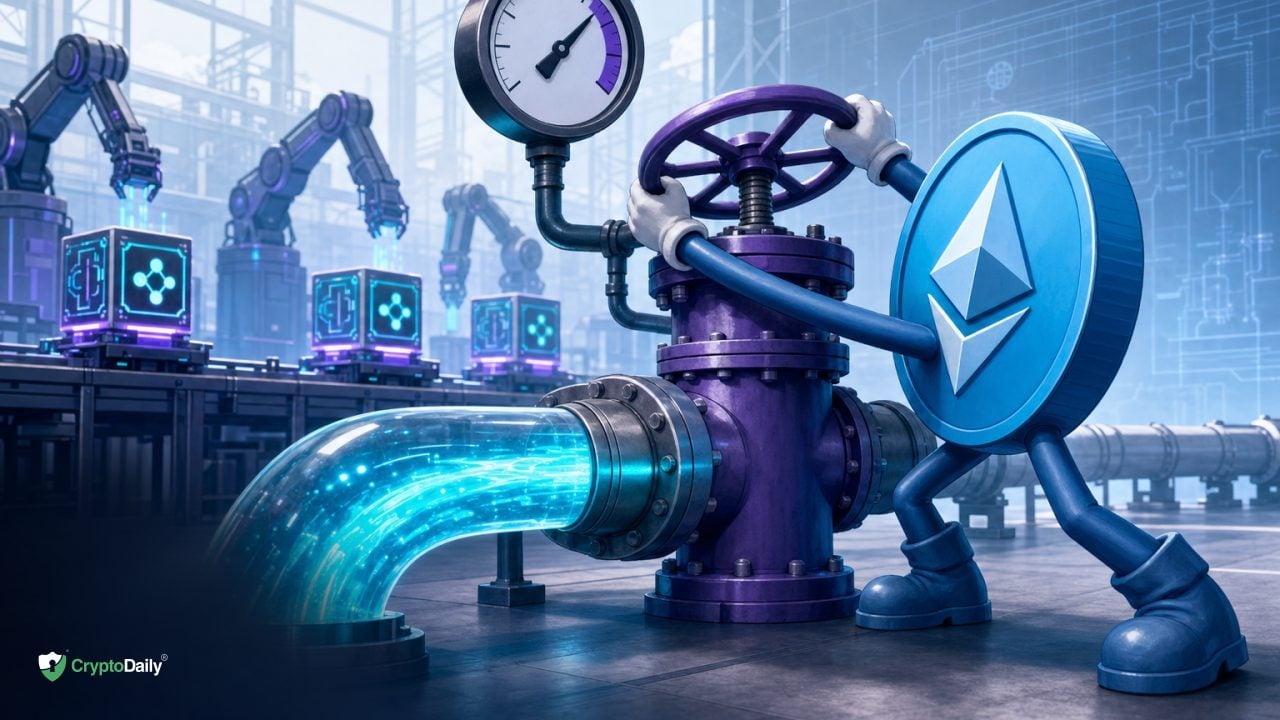
Professional tip: If a deck hand-waves by means of insurance coverage, legal responsibility, and dispute paths, you’re underwriting these dangers your self.None of it is a cause to take a seat out. It’s a cause to demand higher system design and clearer, slower-governed rollouts.Header picture from Paradigm’s July 8, 2026 announcement ‘Saying Our Fourth Fund’ — visible proof of the agency’s $1.2B fund and public shift to incorporate AI and robotics investments. — Supply: Paradigm (official weblog submit)Twelve-month indicators value monitoring
Agent job high quality and take-rates: are charges rising as a result of worth is rising, or as a result of emissions disguise churn?
Bodily-world wins: repeat supply corridors, inspection contracts, or municipal partnerships that renew.
Tooling adoption: broader use of developer stacks like Foundry and consumer range like Reth in manufacturing apps.
Insurance coverage footprints: the primary credible danger swimming pools backing robotic SLAs with out blowing up.
Regulatory readability: sandbox applications for drone corridors or autonomous automobiles with crypto-native settlement.
Onchain metrics are useful, however the very best tells could also be offline: fewer pilots, extra buy orders.Why Paradigm’s transfer issues past the headlinesPlenty of funds can write large checks. Paradigm pairing these checks with open-source infrastructure and a crypto-native worldview is the extra fascinating piece. The agency explicitly mentioned it is going to maintain delivery instruments like Foundry, Reth, Centaur, and EVMbench even because it backs frontier tech rounds (The Block). That’s a recipe for compounding: builders get higher tooling, which reduces integration danger for robots and brokers, which helps extra formidable deployments.Additionally, the early allocations into Zipline and True Anomaly sign consolation working close to regulators and safety-critical domains (CoinDesk). If you need crypto primitives to mediate real-world work, that’s the world it's good to be in anyway. Higher to construct there now than bolt it on later.A sensible closing thoughtCrypto’s position right here is easy to state and exhausting to execute: give autonomous methods methods to show work, receives a commission, and resolve disputes and not using a human referee in each loop. The items exist. The uncomfortable components are the trade-offs round pace, security, and governance. Groups that deal with these as first-class product issues could have the very best shot at sturdy traction.If you need balanced reporting on this convergence because it unfolds, Crypto Each day has eyes on each the dev trenches and the coverage halls. Yow will discover our newest protection at cryptodaily.co.uk.Steadily Requested QuestionsWhat precisely did Paradigm announce?A $1.2 billion fourth enterprise fund targeted on crypto, synthetic intelligence, robotics, and different frontier tech. The agency additionally emphasised ongoing assist for open-source instruments within the crypto stack, per its personal announcement and commerce press protection.Why are crypto VCs investing in {hardware} like drones and space-defense?They see autonomous methods needing programmable settlement, id, and coordination. If robots and brokers transact with one another, onchain rails are a pure match for funds, escrow, and dispute decision. Backing the {hardware} aspect helps drive actual demand for these rails.Is there actual traction in agent infrastructure but?Sure, in pockets. Fundstrat’s June 2026 report cites 1000's of brokers onboarded, thousands and thousands in gross charges, and tons of of 1000's of duties accomplished inside one agent ecosystem, plus early robotics deployments. It’s not mass-market but, nevertheless it’s measurably lively.How does this have an effect on current crypto classes like DeFi?DeFi turns into extra like backend plumbing for machine economies: escrows, danger swimming pools, and programmable payouts. Anticipate extra protocols that look boring from a dealer’s lens however are indispensable for robotic workflows.What are the largest dangers to the thesis?Sensible-contract exploits, security incidents within the bodily world, regulatory friction in aviation or protection, and token fashions that front-run actual utilization. Groups want sturdy dispute methods, insurance coverage backstops, and conservative governance.What ought to founders constructing on this area prioritize?Clear unit economics per process, safety-first structure with off-chain fallbacks, credible attestation and oracle design, and regulatory planning by area. Make the token a device, not the product.Is that this monetary recommendation?No. That is evaluation and context. Crypto and frontier tech are risky and dangerous. Do your personal analysis and contemplate skilled recommendation the place applicable.
Disclaimer: This text is supplied for informational functions solely. It isn't provided or meant for use as authorized, tax, funding, monetary, or different recommendation.