Cryptocurrency Prices by Coinlib
Verifiable Randomness Retains Web3 Sport Rewards Truthful

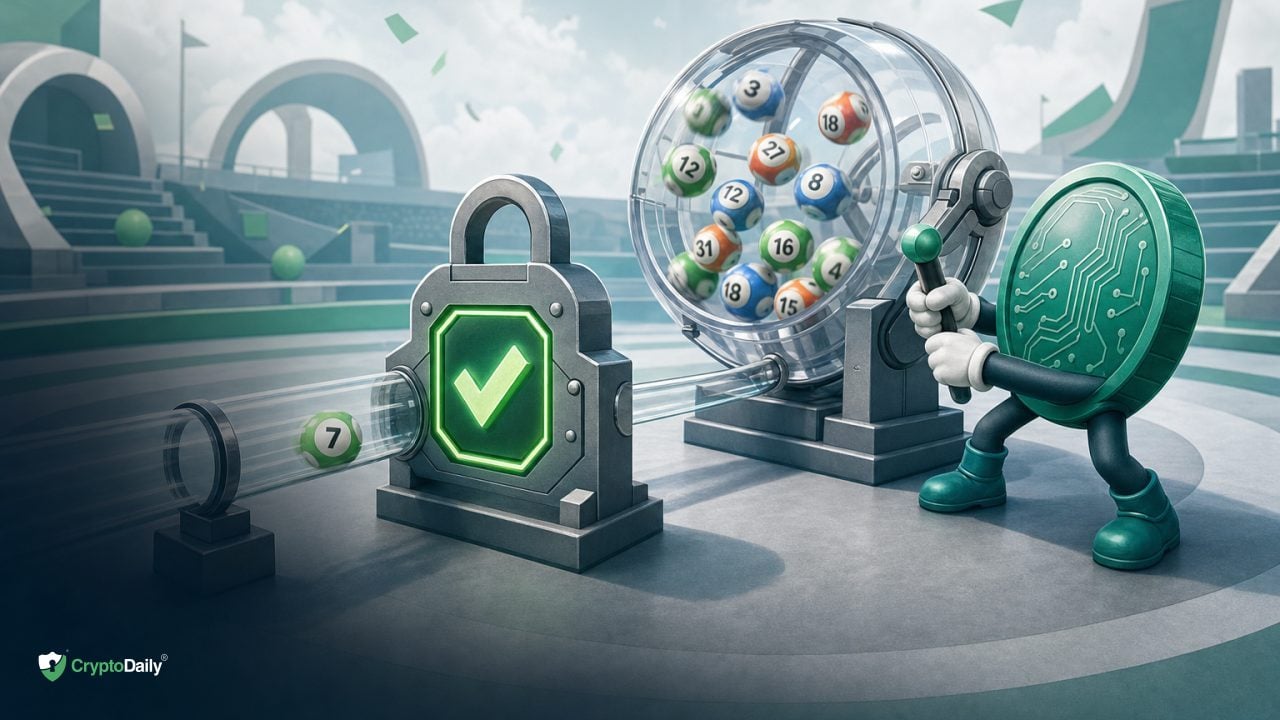
In case you hand out loot, spins, or thriller packing containers in a Web3 recreation, the primary query gamers ask is straightforward: was that truthful? The reply lives or dies together with your randomness. Not simply any randomness — verifiable randomness that gamers and auditors can verify on chain.This piece breaks down what verifiable randomness is, the primary choices in 2026, how you can wire it into actual gameplay with out wrecking UX, and the traps that also catch groups out. We’ll additionally take a look at a number of reside indicators that present the place that is going subsequent.Verifiable randomness lets anybody verify {that a} recreation’s random consequence wasn’t manipulated. As an alternative of trusting a server, you utilize cryptographic proofs or public randomness beacons whose values and era course of are auditable on chain. In apply, groups lean on VRF or beacons, retailer proofs with the consequence, and present that proof within the UI so gamers can confirm the draw.
Use a VRF or a public beacon fairly than blockhash or server-side RNG.
Report the request, response, and proof on chain so the end result may be audited.
Design your recreation move for asynchronous achievement and timeouts.
Expose proof hyperlinks within the UI so gamers can verify equity themselves.
How does verifiable randomness truly work on chain?There are two huge households. One is VRF — verifiable random perform — the place a randomness supplier returns a quantity plus a cryptographic proof that your contract can confirm. If the proof checks out towards a identified public key, you belief the quantity. The opposite is a public randomness beacon, the place you reference a identified randomness feed that’s revealed on a schedule and anchored to many impartial events.With VRF, your contract requests randomness, pays a payment, then waits for a callback carrying the random worth and a proof. With a beacon like drand, you reference the spherical quantity and fetch the worth that spherical produced. The belief mannequin is completely different, however in each circumstances you get one thing you may present to customers and auditors.Widespread components you’ll see in code: a request ID, the buyer deal with, the seed or spherical used, and the proof. Retailer these, as a result of assist tickets arrive when a uncommon drop doesn’t hit. Having the ability to pull the precise proof and present that the mathematics checks out saves complications.What choices exist in 2026, and the way do they examine?Groups nonetheless combine and match, however a number of patterns dominate the stack. Right here’s a plain-English comparability that will help you decide a default and know when to change.
Method
The way it works
Belief floor
Latency
Typical makes use of
Threat notes
Blockhash
Use current block hash as a pseudo RNG
Miner or proposer can bias inside a block
Immediate
Toy apps, by no means for worth
Straightforward to control and chain-dependent
RANDAO
Members commit-reveal to mix entropy
Trustworthy majority of individuals
1-2+ rounds
Protocol-level randomness or DAOs
Griefable, reveal coordination points
VRF (e.g., Chainlink)
Supplier returns worth with a cryptographic proof
Verification key + oracle community
Asynchronous, normally seconds to minutes
Loot, raffles, dynamic rewards
Charges per request, watch supplier availability
Public beacon (drand)
Globally revealed randomness spherical by spherical
Distributed community of individuals
Fastened cadence per spherical
Scheduled attracts, raffles, lotteries
Wants safe bridging to your chain
Server RNG + attestation
Server indicators outputs, posts to chain
Belief in your infra and audit
Quick
Informal video games with low stakes
Weak ensures until audited
There’s actual motion on beacons in 2026. Polkadot’s treasury accredited funding for “Very best Community,” a trustless drand bridge designed to convey verifiable randomness on chain for the ecosystem (Polkadot / SubSquare (Referendum #1383)). The extra first-class this turns into on the protocol layer, the extra predictable and self-serve it will likely be for recreation groups.On the similar time, VRF may be very a lot alive on L2s. You'll be able to see energetic subscriptions and up to date requests on Base, together with entries created in late June 2026, which reveals regular demand from recreation and shopper contracts (Chainlink VRF — Subscription Administration (Base)).How do I wire this into gameplay with out breaking UX?The primary shift is accepting that randomness is asynchronous. You request now, get a callback quickly after, after which settle the end result. Accomplished nicely, this feels snappy. Accomplished poorly, it feels just like the app froze.A typical sample is to gather the consumer motion, emit a request, present a light-weight “resolving” state with a progress spinner or brief lore textual content, then reveal. In case you want sub-second decision, batch low-value actions and resolve them on a cadence as an alternative of one after the other. For prime-value rolls, make the wait a part of the second. Theatricality helps.Right here’s a skeleton of the request-fulfill loop many contracts use:// Pseudocode
perform openChest() exterior {
id = vrf.requestRandomness(params)
requests[id] = msg.sender
}
perform fulfillRandomness(id, worth, proof) exterior onlyVRF {
require(confirm(proof, worth), “unhealthy proof”)
participant = requests[id]
reward = mapToReward(worth)
mintReward(participant, reward)
}
Two further guards: cap retries if achievement stalls, and add a fallback path if the supplier is down. You'll be able to escrow the motion, refund, or change to a secondary supply that’s clearly labeled within the UI.How can gamers confirm equity themselves?Gamers shouldn’t need to belief your phrase. Give them receipts. A good “proof panel” makes an actual distinction in assist and retention. Present the randomness supply, the spherical or request ID, and a hyperlink that lets anybody confirm it independently.One real-world instance outdoors Web3: a public raffle used the drand Quicknet beacon with a specified spherical to resolve the draw, and the occasion web page lists tons of of hundreds of tickets. That’s the type of public anchor that makes fraud arduous and arguments brief (TrueNorth / Rafflex (draw web page)).
Present the request ID and transaction hash that triggered randomness.
Hyperlink to the supplier’s verification web page or spherical explorer.
Expose the proof bytes or a proof-check hash, not simply the output.
Log the mapping from random worth to reward tier in docs.
Clarify the timing window so gamers know when a result's closing.
Professional tip: In case you can’t clarify to a non-technical participant how you can verify a end in below 30 seconds, you’ll lose the argument even in case you’re proper. Ship the proof hyperlink, not a paragraph.The place do issues go incorrect in apply?First, assuming blockhash is “random sufficient.” It isn’t for something of worth. Validators and proposers can withhold or reorder to bias outcomes, particularly when the prize is massive relative to dam rewards.Second, turning a random quantity right into a reward is surprisingly simple to mess up. Easy modulo bias could make some objects drop extra typically than meant. Use rejection sampling or map over cumulative weights to maintain the distribution sincere.Third, consumer expertise. In case you fireplace one randomness request per micro motion, latency provides up. Batch the place it gained’t harm engagement, and stage your reveals so the wait feels intentional, not damaged.What modified in 2026 and why it issues?Two issues stand out this 12 months. On the infrastructure facet, ecosystems are taking randomness significantly. Polkadot’s approval to fund a trustless drand bridge is a transparent sign that on-chain, verifiable randomness is turning into a first-class primitive, not a plug-in afterthought (Polkadot / SubSquare (Referendum #1383)).On the applying facet, utilization is seen. Chainlink’s VRF dashboard for Base reveals recent subscriptions and requests, reinforcing that shopper apps and video games nonetheless depend on exterior verifiable randomness in manufacturing (Chainlink VRF — Subscription Administration (Base)).And the market context is greater than Web3. Business protection estimates that world spending on RNG certification by main labs tops roughly 280 million {dollars} a 12 months. That’s iGaming, lotteries, and controlled markets paying to show equity — a robust read-through for crypto video games that need mainstream belief (Tech‑Insider (iGaming Tech)).In the meantime, public occasions anchor to beacons individuals can verify on their telephones. That raffle that tied its draw to a selected drand Quicknet spherical is a small however telling instance of social verifiability in motion (TrueNorth / Rafflex (draw web page)). Web3 video games can and may mirror that simplicity.Infographic exhibiting how Chainlink VRF produces verifiable, tamper‑proof randomness (visualizes the proof move builders and gamers can audit — straight related to making sure truthful recreation rewards). — Supply: Chainlink (go.chain.hyperlink)How do charges, latency, and availability impression design?Charges are actual. In case your financial system is dependent upon dozens of requests per energetic consumer per session, prices will drift. VRF charges and fuel in your goal chain each matter. A standard method is to route low stakes randomness via a less expensive chain or batch requests off-peak.Latency is much less about uncooked seconds and extra about predictability. Beacons provide you with a heartbeat — one spherical each X seconds — which is nice for attracts however can really feel sluggish for motion video games. VRF callbacks are event-driven and sooner on common, however nonetheless asynchronous. Design your moments so the wait is sensible.Availability is the quiet killer. Construct fallbacks. Hold a secondary supplier on standby or a mode that pauses high-value drops and points IOUs if the primary supply is down. Be clear within the UI. Gamers forgive outages after they see clear steps and an audit path.Widespread Errors
Utilizing blockhash for worthwhile rewards: change to VRF or a beacon and confirm proofs on chain.
Modulo bias in reward mapping: use weighted distributions or rejection sampling to protect chances.
No user-facing proof: add hyperlinks to the spherical, request ID, and verification web page proper within the drop modal.
Ignoring failure modes: outline timeouts, refunds, and secondary randomness sources earlier than launch.
Unbounded requests: throttle or batch to regulate prices and keep away from spamming suppliers throughout spikes.
Opaque odds: publish drop charges and model them; hidden odds invite disputes and regulator questions.
If you'd like ongoing protection, evaluation, and context on infrastructure shifts like VRF and beacons, we monitor these throughout chains and shopper apps at Crypto Day by day.Regularly Requested QuestionsCan validators or miners bias VRF outcomes?Circuitously. A legitimate VRF consequence should be accompanied by a proof that your contract verifies towards a identified key. A block producer might delay or withhold a callback transaction, however that’s completely different from altering the random worth itself. Set timeouts and retries to deal with delays.Is beacon-based randomness higher than VRF for my recreation?It relies upon. Beacons shine for scheduled occasions and easy public verification. VRF matches interactive moments the place you need on-demand outcomes and per-request proofs. Many groups use each: beacon for large weekly attracts, VRF for minute-to-minute loot.How do I forestall front-running round random reveals?Don’t let customers see the randomness earlier than their motion is dedicated. Use a commit-then-reveal move or lock the end result primarily based on a future spherical or a request ID that solely resolves after the consumer motion is closing on chain.What occurs if the randomness supplier goes down mid-event?Outline a fallback within the contract: escrow, timeout, or secondary supply. Within the UI, present standing and subsequent steps. Keep away from silently switching sources with out telling gamers — that erodes belief quick.Can we self-host randomness and keep “provably truthful”?You'll be able to, however you’ll shoulder audits, key administration, and reputational threat. Exterior VRF or public beacons scale back the blast radius. In case you should self-host, publish verification keys, proofs, and third-party audits.Do regulators care how I generate randomness?In iGaming and a few jurisdictions, sure. The broader market spends closely on RNG certification annually, which hints at expectations even for crypto-native initiatives. Align your strategies with requirements the place relevant and hold an audit path you may hand over if requested.Are L2s protected for randomness-heavy video games?Usually sure, and cheaper. Simply make sure the randomness supply is offered in your L2 and that you simply deal with bridge or callback nuances. Monitor supplier dashboards on your goal chain to catch points early.
Disclaimer: This text is supplied for informational functions solely. It's not supplied or meant for use as authorized, tax, funding, monetary, or different recommendation.