
Cryptocurrency Prices by Coinlib
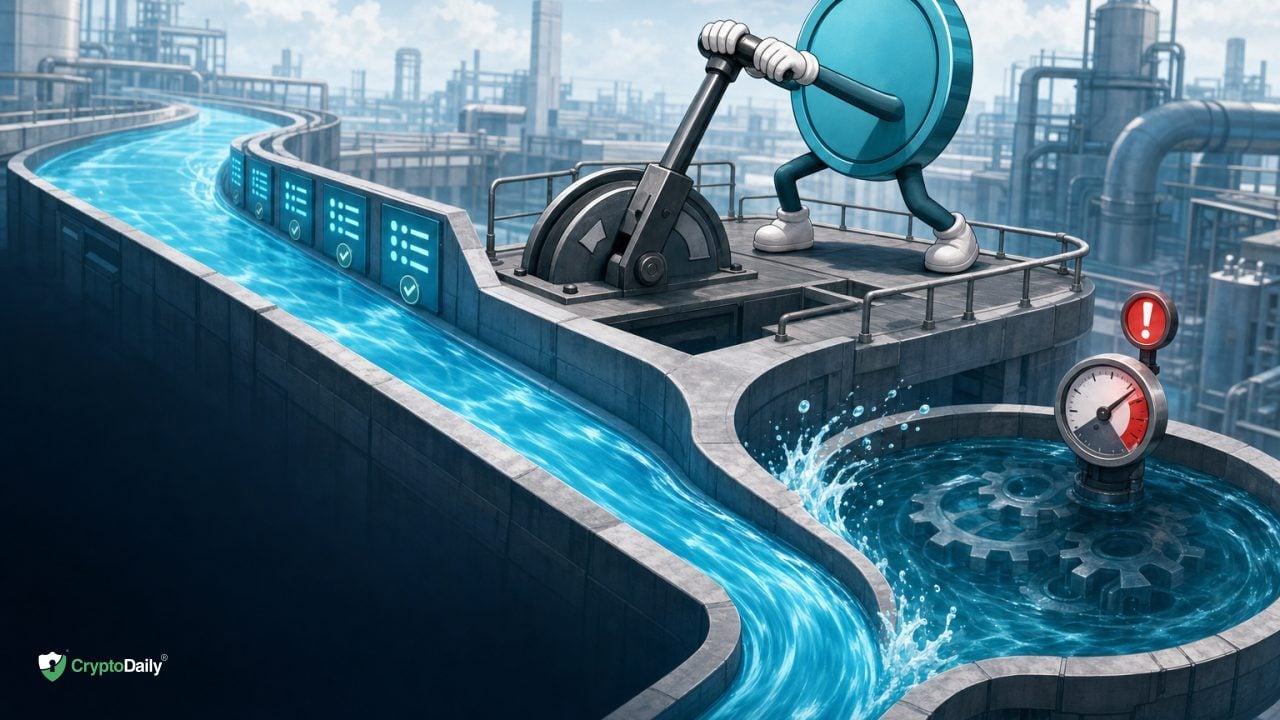
Onchain RFQ vs AMMs: The place Large Orders Really Fill

Large crypto orders don’t simply hit a pool and hope. They hunt for liquidity throughout AMMs, RFQ market makers, and typically non-public lanes most individuals by no means see. In case you’ve ever tried to maneuver dimension onchain and watched worth wiggle away from you, that is for you.We’ll break down how onchain RFQ really works, the way it stacks up towards AMMs, the place aggregators supply fills, and the traps that clip massive orders. I’ll additionally level to contemporary datasets that hint the precise path your swap took, so you'll be able to confirm the place dimension actually got here from.Why now? Onchain liquidity is maturing quick. Tokenized Treasuries and cash market funds are actually an enormous footprint on public chains, an indication that larger gamers are comfy parking dimension onchain — they usually anticipate pro-grade execution once they commerce.Massive merchants more and more use onchain RFQ (request-for-quote) to get agency quotes from market makers and decrease worth affect, whereas AMMs stay the default for smaller or long-tail tokens. Aggregators route between the 2 based mostly on dimension, depth, and slippage settings, typically splitting the order. In brief: AMMs worth constantly, RFQ quotes discretely; whales mix each.
AMMs shine for immediate fills and long-tail belongings; slippage rises with dimension.
RFQ will get you agency quotes from PMMs/solvers, typically with higher internet worth for large tickets.
Aggregators resolve route in actual time and should cut up throughout AMMs and RFQ makers.
MEV, gasoline, and expiry home windows matter; non-public lanes can defend massive orders.
Use orderflow instruments to verify in case your fill was AMM or RFQ-sourced.
How does onchain RFQ really work?RFQ is straightforward in spirit: you ask a community of market makers for a quote; they reply with costs; you choose the very best and settle onchain. The wrinkle is coordination. Quotes may be computed offchain by PMMs (skilled market makers) or solvers, then dedicated onchain through a small contract name. That’s why you’ll hear individuals say RFQ is hybrid. Discovery offchain, settlement onchain.For a big commerce, you or an aggregator bundle the order context: token pair, dimension, facet, max slippage, and typically hints about hedging venues. Makers reply with a worth that elements of their stock, hedging routes (CEX, perps, correlated pairs), and the gasoline they’ll pay. In case you settle for, the maker executes the settlement transaction or indicators a message you'll be able to settle your self.Good RFQ flows additionally embody protections: quote expiry (seconds), match-ahead guidelines to stop sandwiching, and typically non-public relay submission so the quote isn’t broadcast to searchers earlier than it lands in a block.What actually separates RFQ from AMMs for dimension?AMMs worth alongside a curve. Push dimension by and also you slide down that curve. RFQ makers don’t reprice on a curve; they worth your actual order, then attempt to hedge it. That distinction issues whenever you’re buying and selling dimension in skinny markets.Right here’s a decent comparability that captures the primary trade-offs:
Matter
AMM
Onchain RFQ
Worth formation
Steady curve from pool reserves
Discrete quotes from makers/solvers
Slippage on massive orders
Rises nonlinearly with dimension
Embedded in quote; typically decrease for large tickets
MEV publicity
Increased if public mempool
Usually decreased through non-public lanes or dedicated quotes
Settlement
Direct pool swap
Maker or solver contract executes onchain
Counterparty
Pool LPs, permissionless
Named or whitelisted PMMs/solvers
Lengthy-tail tokens
Usually the one route
Could also be unavailable or huge spreads
Privateness
Public until utilizing non-public RPC
Negotiation offchain; onchain settlement seen
Operational overhead
Low, click-and-swap
Quotes, expiries, signatures, and routing logic
In follow, aggregators mix each. They’ll check a small “warm-up” quantity on AMMs to probe depth and worth, ping RFQ makers for agency dimension, then cut up the order. You get a composite fill that hides a whole lot of shifting elements.When ought to I cut up a big order?Not each massive commerce must be chopped up. If the pool is deep and the pair is blue-chip, a single chunk may be nice. However more often than not, splitting helps cut back affect, clean execution by volatility, and preserve your intent much less apparent.Right here’s a fast guidelines I exploit earlier than slicing an order:
Depth vs dimension: In case your order is over 1–2 p.c of seen AMM depth at goal slippage, think about RFQ or splitting.
Volatility: Quick markets favor staggered fills or RFQ with brief expiries.
Routing choices: If aggregators present a number of viable paths, splitting often pays.
Gasoline math: A number of small fills can value extra gasoline than one RFQ. Evaluate internet worth, not simply spot.
Privateness: Use non-public submission for the larger chunks to chop MEV leak.
Time-weighted methods (TWAP) nonetheless matter onchain. Many solvers can schedule chunks throughout blocks whereas monitoring quotes. Simply set your max period so that you’re not chasing a shifting goal for hours.How do aggregators and solvers choose between AMM and RFQ?Aggregators watch two streams: public AMM quotes and personal RFQ responses from makers. They simulate fills with gasoline, route threat, and slippage. If an RFQ quote beats the very best simulated AMM path after prices, they’ll take it. If the RFQ is stale or too huge, again to swimming pools they go.We will really see this distinction now in public information. Allium’s DEX Analytics schema surfaces separate views for dex.trades (AMM pool fills) and dex.aggregator_trades (fills routed through aggregators, intent programs, and RFQ/PMM liquidity), which lets researchers inform how a swap was actually executed (DEX Analytics (Allium)). Their Orderflow Explorer maps the total path of a swap throughout EVM chains — frontends, meta-aggregators, solvers or PMMs, then the ultimate AMM swimming pools if used — a clear solution to hint the place massive trades really sourced liquidity (DEX Analytics (Orderflow Explorer)).It’s not simply execution nerds wanting. Allium was additionally cited as the first on-chain information supply in Bitwise’s inaugural Q3 2026 Staking Report, a small however telling signal that mainstream analysis is leaning on one of these orderflow readability (Allium (Press & Information itemizing / The Onchain Question)).Professional tip: If an aggregator helps you to, log or export the route. Later, examine it to Allium’s path view to confirm whether or not your worth got here from AMM depth, a solver’s RFQ quote, or each. It’s the simplest solution to sanity-check execution high quality.What about MEV, gasoline, and settlement threat?For AMMs, the primary ache is MEV in the event you’re broadcasting a juicy swap. Sandwiching can widen your efficient value. Personal RPCs and guarded builders assist, and plenty of frontends now default to them for larger trades. RFQ paths typically push settlement through non-public lanes by design, which takes a whole lot of the sting out.Gasoline is extra easy. A single RFQ fill might be cheaper than a number of hops throughout swimming pools, however not at all times. Hops and approvals add up. On unstable days, a maker may issue gasoline into their quote, so it’s mirrored within the worth you see. At all times examine net-out, not simply the headline spot.Settlement threat is uncommon however actual. With AMMs, you face sensible contract threat and pool worth motion between submission and inclusion. With RFQ, you add quote expiry and counterparty habits. If a maker’s hedge slips, they'll cancel or requote. Tight expiries and clear failure guidelines assist, and good aggregators implement them routinely.Is RFQ value it in 2026 for RWA-heavy portfolios?Quick reply: often, sure, particularly for dimension and for tokens tied to deeper macro markets. Tokenized real-world belongings have grow to be a critical footprint: as of mid-July 2026, Allium’s cross-chain RWA dataset reveals $29.5 billion in tokenized RWAs, with $16.3 billion in Treasuries and money-market funds alone (Allium (The Onchain Question)). That liquidity doesn’t all sit in AMM swimming pools; lots is managed by skilled desks preferring agency quotes and personal hedges.In case you’re rotating stablecoin treasuries, rebalancing RWA-backed vaults, or shifting between L2s, RFQ makers can internalize a few of that movement or hedge throughout CEX perps and SoFi-like rails quicker than an AMM path can deal with, notably when charges or funding are jumpy.That mentioned, AMMs nonetheless dominate long-tail and experimental belongings, they usually’re nice for rapid, permissionless entry. Blue-chip majors more and more see RFQ blends as a result of the price to maneuver dimension quietly is simply decrease.Cowl picture for Allium’s ‘Mapping the Movement of DEX Swap Execution' — factors to the Orderflow Explorer used to hint whether or not massive swaps path to AMM swimming pools or are stuffed by RFQ/PMM liquidity (helpful because the entry visible to the interactive orderflow information). — Supply: Allium (Orderflow Explorer weblog publish)How do I confirm the place my commerce really stuffed?Two choices. The short one: test your aggregator’s route particulars. Many present which swimming pools and which maker contract stuffed you. The thorough one: use an orderflow explorer that reconstructs the trail.Allium’s Orderflow Explorer does this throughout a number of EVM chains, stitching the frontend, any meta-aggregators, the solver or PMM that equipped a quote, and whether or not a part of the order in the end settled towards an AMM pool (DEX Analytics (Orderflow Explorer)). As a result of their schema cleanly splits AMM pool occasions from aggregator/intent/RFQ occasions, it’s simpler to attribute the worth you bought to the actual liquidity supply (DEX Analytics (Allium)).Why care? In case your finest fills constantly come from a particular maker, you may optimize by increasing allowlists or pre-approvals with that counterparty. In the event that they’re principally AMM hops, your focus ought to shift to gasoline, approvals, and MEV safety.Frequent Errors
Forgetting slippage math. A “tight” 0.1 p.c slippage on an AMM path might be worse than a wider RFQ unfold when you issue curve affect and gasoline. At all times examine internet execution.
Letting quotes expire. RFQ home windows are brief. In case you signal and stall, you’ll miss the fill and pay once more to resubmit. Hold approvals prepared and wallets funded for gasoline.
Ignoring non-public routing. Broadcasting a whale-sized AMM swap on a public mempool invitations MEV. Use non-public RPCs or protected builders, and like RFQ routes that settle privately.
Skipping approvals planning. Leaping throughout many swimming pools mid-trade triggers new token approvals and additional calls. Pre-approve doubtless routers or centralize by an aggregator you belief.
Trusting unknown counterparties. RFQ with nameless makers is dangerous. Use respected aggregators or named PMMs; confirm contracts and permissions.
In case you worth clear, plain-English context on this type of market construction, Crypto Each day tracks execution tendencies and onchain shifts with out the fluff. You'll be able to browse the newest explainers and market protection at Crypto Each day.Continuously Requested QuestionsWhat order sizes make RFQ begin to beat AMMs?It is dependent upon the pair and pool depth. As a rule of thumb, as soon as your commerce would transfer an AMM worth by 30–100 bps, RFQ quotes typically win. On majors throughout calm intervals, that threshold might be increased; on long-tail tokens, it may be a lot decrease.Do I have to KYC for onchain RFQ?Most permissionless RFQ flows don’t require KYC, however some makers require allowlisting for bigger tickets or particular belongings. In case you’re a fund or DAO buying and selling dimension repeatedly, pre-establish these relationships so quotes don’t fail at go time.Can RFQ defend me from all MEV?No. RFQ reduces publicity through the use of non-public lanes and agency quotes, however it could’t get rid of inclusion threat solely. Ask in case your route helps non-public relay submission and builder preferences that decrease leakage.What occurs if the market strikes throughout an RFQ?Your quote can expire or be canceled. Good routes preserve expiries tight and re-quote rapidly. If volatility is excessive, a TWAP with smaller chunks could also be safer than chasing one big agency quote.How do cross-chain RFQs work?Solvers worth your supply asset, the bridge or messaging threat, and the vacation spot asset. Settlement might use canonical bridges or liquidity networks. Anticipate wider spreads than same-chain RFQ, and double-check the bridge’s safety assumptions.Can I see which maker stuffed my commerce after the actual fact?Usually, sure. Aggregators label maker contracts, and orderflow instruments can attribute fills to particular solver or PMM addresses. For deeper evaluation, examine your transaction hash towards an orderflow explorer path to verify attribution.
Disclaimer: This text is supplied for informational functions solely. It's not provided or supposed for use as authorized, tax, funding, monetary, or different recommendation.