Cryptocurrency Prices by Coinlib
Zombie Good Contracts: Dangers in Deserted DeFi

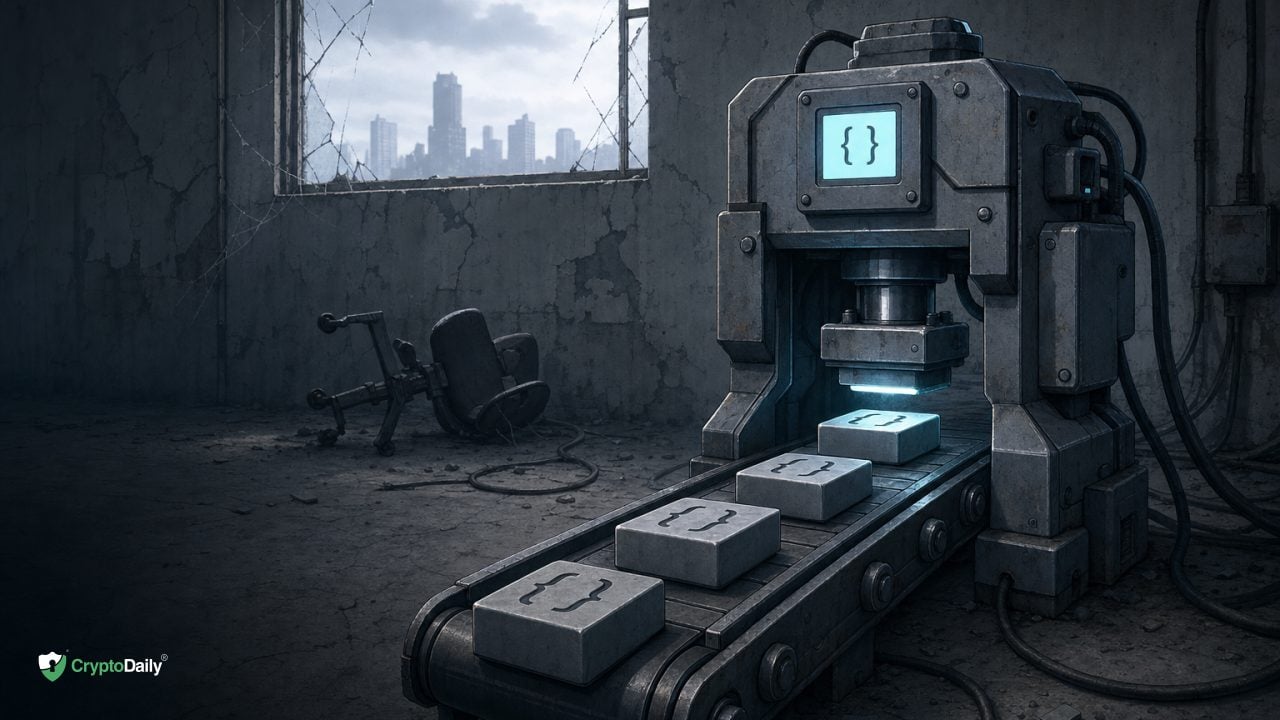
A zombie good contract is on-chain code {that a} crew has deprecated or stopped sustaining however that also runs and might maintain funds, settle for calls, or execute logic. Public deprecation notices or shutting down a entrance finish don't disable the contract itself. The bytecode stays reside at its tackle, so interactions proceed so long as callers present legitimate inputs. This dynamic is documented within the Rekt submit‑mortem on Aztec Join.In DeFi, this leaves a protracted tail of deserted contracts that hold financial worth and callable entry factors on-chain. Attackers probe these endpoints, and bots or unaware customers might work together with legacy addresses. The danger persists as a result of Ethereum contracts are immutable by default; solely express improve designs enable habits adjustments.If an improve path or admin authority is eliminated or renounced, groups could also be unable to pause, patch, or retire the legacy contract. That limitation follows from Ethereum’s immutability mannequin and the way in which proxy/UUPS/diamond patterns depend on admin roles, as described within the Ethereum Basis good contract safety docs.How zombie good contracts persist on-chainEthereum good contracts can't be modified as soon as deployed. Any means to change habits should be explicitly designed by patterns equivalent to proxies, UUPS, or diamonds, which delegate calls to upgradeable logic. These patterns rely upon admin keys or governance roles. If these roles are misconfigured, compromised, or renounced, the crew can lose the flexibility to repair or retire the contract totally, even when they've deprecated it publicly. See the Ethereum Basis documentation for the safety implications of immutability and improve patterns.Deprecating a product or shutting down an internet site doesn't have an effect on bytecode on-chain. The tackle stays callable, and any residual state or worth persists. Attackers can work together immediately through transactions, and integrators that also level to a legacy tackle can unknowingly route customers to deprecated logic. The phenomenon of deserted or zombie contracts has been noticed for years in educational and empirical work, together with early measurements of dormant and unmaintained contracts on Ethereum famous by CSIRO Data61 (2016 evaluation).What turns deprecation into an assault surfacePost‑deprecation danger is just not theoretical. It emerges from a number of sensible mechanics recognized in incident reconstructions:
Dwell entry factors: capabilities stay callable even after a venture declares deprecation, leaving helpful operations open to adversaries. This was highlighted within the technical reconstruction of Aztec Join.
Residual worth: immutable contracts should maintain funds or liquidity‑supplier positions, turning them into honeypots for specialised exploits or state manipulations.
Damaged assumptions about admins/off‑chain actors: if a contract expects an operator, relayer, or sequencer to behave in a sure approach, these assumptions can fail as soon as groups wind down or keys are eliminated.
Architectural boundaries: mismatches on the off‑chain proof vs on‑chain settlement boundary might be abused with out breaking cryptography, as defined within the Aztec Join submit‑mortem.
Business summaries have famous a number of drains of deprecated or legacy contracts throughout chains in 2025–2026, framing this as an operational and lifecycle danger slightly than a single bug class. A PANews abstract citing ZeroDrift information these observations.Case instance: Aztec Join’s deprecated RollupProcessorV3In June 2026, the deprecated RollupProcessorV3 contract utilized by Aztec Join was drained for roughly $2.1–$2.3 million. Analyses describe a settlement‑boundary bypass on the deprecated pathway slightly than a brand new cryptographic break. The vital level is that the contract was nonetheless reside and callable at its tackle even after deprecation. See the PANews abstract citing ZeroDrift and the Rekt submit‑mortem for particulars.The takeaway is operational: deprecating a product doesn't decommission its on‑chain contracts. Except entry factors are disabled or funds are migrated, residual worth and callable logic invite focused exploitation.Who's uncovered when a protocol goes darkish
Finish customers with residual balances: funds left in vaults, swimming pools, or escrow‑model contracts might be stranded or uncovered to novel assault paths.
Integrators and aggregators: routers or entrance ends that also reference legacy addresses might proceed sending transactions to deprecated logic.
Protocol groups and DAOs: if admin roles had been renounced to sign decentralization, the crew could also be unable to pause or patch legacy code ought to a brand new danger emerge. This limitation follows from the mannequin described within the Ethereum Basis safety docs.
Auditors and screens: tooling usually focuses on energetic deployments, leaving blind spots for deprecated addresses that however maintain worth.
A decommissioning runbook groups can followZombie contracts are greatest prevented with lifecycle planning. Business steering, together with the OpenZeppelin Contracts & Upgrades steering, emphasizes planning migrations, utilizing multisigs for admin, and implementing secure modes. A sensible runbook appears to be like like this:
Stock every part. Checklist all deployed addresses, improve proxies, admin roles, keepers, approved actors, and dependent companies.
Publish a wind‑down plan. Talk a transparent timeline and the precise addresses in scope. Give customers a withdrawal window and repeated reminders.
Allow withdraw‑solely or pause modes the place the code helps it. Choose managed states that enable exits however block new deposits, borrows, or advanced flows.
Drain residual worth managed by the protocol. Migrate treasury funds and unwind LP positions held by admin‑owned contracts.
Revoke approvals and roles. Take away operator keys, disable relayers, and tighten entry management lists in a staged, documented order.
Finalize improve paths. If utilizing proxies and upgrades are nonetheless attainable, level implementations to minimal logic that blocks state‑altering entry factors besides withdrawals.
Harden administration. Transfer any remaining authority to a nicely‑ruled multisig (e.g., a Protected) with express signers and a broadcast coverage, as advisable in practitioner steering like OpenZeppelin.
Retire off‑chain dependencies. Shut down keepers and automation, archive entrance ends, and doc that legacy addresses are deprecated and unsupported.
Monitor and insure the tail. Maintain alerts, bounties, or protection for a interval after wind‑right down to catch sudden calls or worth flows into the previous addresses.
Shut the loop. Publish a submit‑decommissioning report with closing states and hyperlinks to explorers so customers and integrators can confirm outcomes on-chain.
Limits and misconceptions to observe
Immutability cuts each methods. If admin keys are renounced or an improve path by no means existed, the crew can't later add a pause or withdrawal mode. That follows from the immutability and upgradeability mannequin.
Deprecation is just not a kill change. Bulletins or shutting down a UI don't make a contract secure or inactive. This was underscored within the Aztec Join reconstruction.
Audits age. Code that after handed evaluate can grow to be dangerous when off‑chain actors disappear, financial circumstances change, or assumptions now not maintain.
Not all proxies are equal. Poorly designed improve paths can depart sudden callable routes or storage collisions that complicate decommissioning.
Residual funds appeal to consideration. Even small balances in deprecated addresses can incentivize tailor-made assaults, as mirrored in incident trackers cited by PANews/ZeroDrift.
The place you’ll encounter zombie contracts in practiceReaders are probably to satisfy zombie contracts once they:
Comply with a tutorial or aggregator that references an older tackle of a protocol that has since migrated.
See a number of variations of a pool, vault, or router on a block explorer, with unclear steering on which is present.
Work together immediately by contract tackle after a entrance finish goes offline, unaware that performance has been deprecated however not disabled.
Maintain belongings in a protocol that asserts a wind‑down, leaving a window to withdraw however no on‑chain enforcement that blocks later dangerous interactions.
Earlier than touching a legacy tackle, test for proxy patterns and present implementation, affirm admin roles or pause states, learn current advisories, and confirm that your actions match the protocol’s newest migration path.Continuously Requested QuestionsHow can I inform if a contract is deserted or nonetheless energetic?Search for current on‑chain exercise, governance or developer bulletins, and whether or not the venture lists the tackle as present. Test if the contract is behind a proxy and whether or not the implementation was just lately up to date. If admin roles are renounced and there's no improve path, upkeep choices are restricted per the Ethereum Basis docs.Does renouncing admin keys make a protocol safer?It might probably scale back sure governance dangers, nevertheless it additionally removes the flexibility to pause, patch, or retire a defective or deprecated contract. That commerce‑off is inherent to Ethereum’s immutability and upgradeability mannequin described by the Ethereum Basis.If a contract is deprecated, is it secure to maintain utilizing it?No. Deprecation notices and shutting down UIs don't disable on‑chain code. The contract stays callable and might nonetheless maintain funds, as seen in analyses just like the Rekt Aztec Join submit‑mortem.Are zombie contracts solely an Ethereum difficulty?No. The sample can seem on any chain with immutable or semi‑immutable good contracts. Trackers cited by PANews/ZeroDrift noticed drains of deprecated or legacy contracts throughout a number of chains in 2025–2026.What ought to integrators do when a dependency is deprecated?Repoint to the brand new addresses, take away or block routes to deprecated logic, and carry out a targeted integration evaluate. Take into account including circuit breakers, stricter allowlists, and deprecation warnings so customers don't unintentionally work together with zombie endpoints.
Disclaimer: This text is supplied for informational functions solely. It's not provided or supposed for use as authorized, tax, funding, monetary, or different recommendation.