
Cryptocurrency Prices by Coinlib
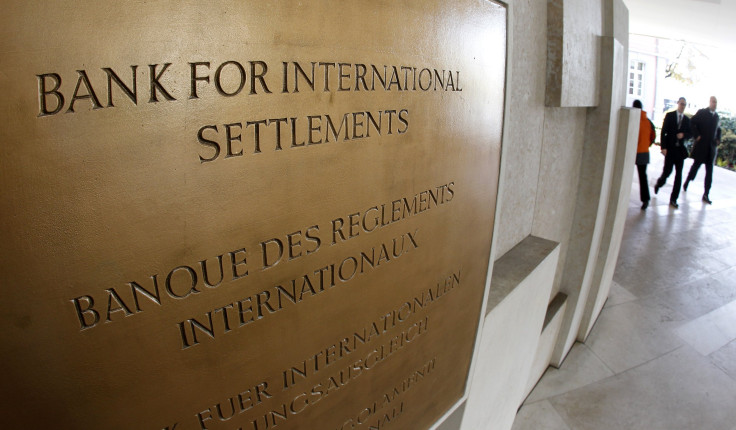
BIS Examine: Larger Deposit Charges Could Put The Brakes On Stablecoin Progress, However Not Halt It – EGamers.io – P2E NFT Video games Portal

Get our tales first on GoogleAdd egamers.io as a most well-liked supply and our reporting reveals up greater in your Prime Tales.A single foundation level, or 0.01 share factors, is a charge shift so tiny that the majority savers would by no means discover it. Even so, a brand new Financial institution for Worldwide Settlements (BIS) working paper discovered {that a} change of that dimension coincided with slower progress in stablecoins similar to USDT and USDC.That major outcome has its limits. Paying depositors extra could let banks sluggish the expansion of stablecoins, however the paper doesn't present that banks can cease it.The impact of 1 foundation pointThe researchers, Rashad Ahmed and Iñaki Aldasoro, labored with weekly knowledge working from January 2019 to June 2025. Their evaluation managed for bitcoin costs, Treasury yields and wider monetary circumstances. Throughout that knowledge, a one foundation level improve in common financial institution deposit charges over one week predicted slower stablecoin progress.Put in numbers, the paper discovered that common 10-week progress in stablecoin market capitalization dropped from roughly 15% to roughly 12%.The estimate the authors want factors to an even bigger impact. That mannequin accounts for the chance that banks increase charges in response to stablecoin progress, and it put the influence at about thrice bigger, with progress slowing to about 6%. The authors famous some weaknesses on this method, although, so the bigger determine requires extra warning than the smaller one.In neither mannequin did progress flip detrimental. It slowed, nevertheless it continued.USDC is extra delicate than USDTThe two largest stablecoins reacted otherwise. The connection was stronger for Circle’s USDC than for Tether’s USDT, a sample the authors stated matched USDC’s nearer connection to U.S. customers.That's consistent with how the mechanism ought to function. Larger deposit charges are geared toward successful again precisely the sort of greenback holder who can decide between a U.S. checking account and a stablecoin.Why financial institution chiefs maintain bringing it upBanks have been sounding the alarm on this for a while. In January, Financial institution of America CEO Brian Moynihan cautioned that as much as $6 trillion in deposits may shift into stablecoins and related yield-offering merchandise, which may shrink lending capability and push borrowing prices greater.Actuality is extra difficult than cash merely leaving the banking system. A Federal Reserve employees evaluation from December identified that funds put into stablecoins can movement again to banks as issuer deposits. Total deposits can maintain regular even because the make-up of a financial institution’s funding adjustments.That change isn't free. Larger uninsured balances may power banks to maintain extra liquid belongings readily available, leaving much less capability for the long-term loans monetary establishments make.Elevating charges isn’t low cost for banks eitherOffering savers extra to maintain them round pushes up a financial institution’s funding prices. In line with the Fed evaluation, banks may direct higher charges at clients most probably to modify whereas maintaining charges decrease for depositors much less inclined to go away.Put merely, if that occurs, the speed you get may hinge on how seemingly your financial institution thinks you might be to stroll away.The paper’s limitsThe BIS paper doesn't present that banks misplaced deposits or lending. Its pattern spans just one interval of excessive charges. Its conclusions may shift as yield-bearing stablecoins and tokenized cash market funds develop, as a result of these merchandise compete on returns.The authors framed their conclusion rigorously. Banks “retain some affect over the tempo of that adoption by means of deposit pricing,” they wrote. That offers banks some say over how shortly adoption occurs, not a solution to stop it, and each charge improve comes at a price to them.
Source link