
Cryptocurrency Prices by Coinlib
Nvidia's Open-source Flora Labels An Hour Of Robotic Video For 72 Cents, In opposition to About $88.50 On GPT-6 Astra – EGamers.io – P2E NFT Video games Portal

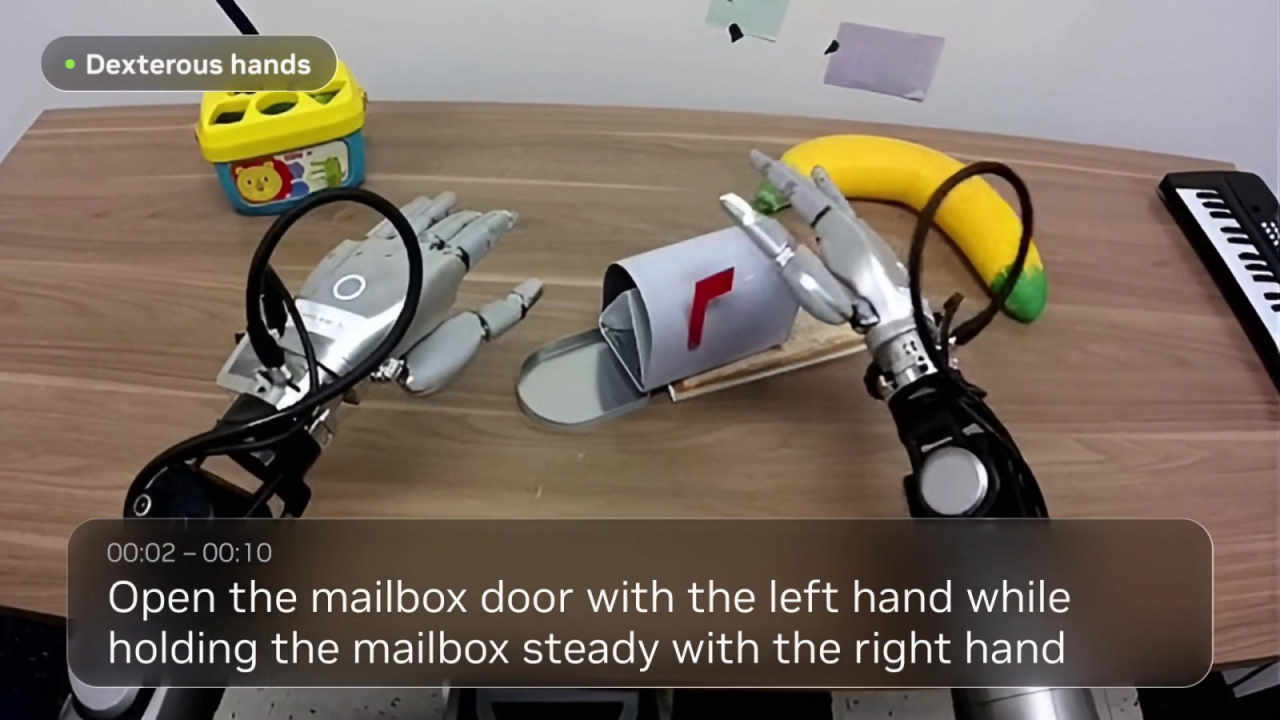
Get our tales first on GoogleAdd egamers.io as a most popular supply and our reporting reveals up greater in your Prime Tales.Nvidia’s new open knowledge engine, Flora, can annotate an hour of robotic video for 72 cents, in keeping with the corporate. Working the identical job by way of OpenAI’s GPT-6 Astra prices roughly $88.50. On paper that settles it. The benchmarks behind the declare are much less tidy.Flora is open supply, and the fashions are on Hugging Face. Nvidia stated the engine is already a part of coaching for its GR00T fashions, the place it labels as a lot as 200,000 hours of video a day on 512 GB300 GPUs.The 72-cent value is an estimateNobody measured these prices in manufacturing. Nvidia projected them, utilizing an assumed rental fee of $10 per GPU per hour. A distinct cloud invoice provides you a special per-hour determine.Even when you settle for the estimate as given, the hole is large. Nvidia stated Flora scored barely higher than GPT-6 Astra in a 50-video check, and Astra was allowed its full reasoning capability. Claude Opus 5 did a lot worse on the identical check whereas nonetheless costing about $42 per hour.Matching or edging out Astra for about 1/one hundred and twenty fifth of the worth is a robust gross sales pitch. The check, although, lined solely 50 movies, and the corporate that ran it sells the GPUs.Why robots want three sorts of labelsBig robotic AI fashions study from video, and that footage wants textual content annotations. Nvidia’s GEAR analysis lab kinds them into three varieties. The primary data which motion occurs at what time, and groups use it to choose coaching knowledge. The second scores a robotic’s progress step-by-step, so the robotic can study by trial and error. The third decides whether or not a job succeeded, which is how deployed robots are monitored.Most present instruments cowl one of many three. Giant language fashions corresponding to GPT-6 Astra can deal with a number of, however they value an excessive amount of on the volumes robotics groups work with. The paper says Flora handles all three.Nvidia's open-source Flora labels an hour of robotic video for 72 cents, towards about $88.50 on GPT-6 Astra 31Three Qwen fashions, one job eachUnder the hood, Flora is three fine-tuned Qwen3.5 fashions. A 9B mannequin splits every video into motion segments. A 27B mannequin then writes an outline of each phase, utilizing context from what got here earlier than and after it.The third piece is one other 27B mannequin, Flora-Rewarder, and its function modifications with the immediate. It may fee how properly an episode went on a 1-to-5 scale, label each half-second step as regular, suboptimal or failure, and rating episodes towards rubrics the consumer defines.Flora’s wins, and Astra’sFlora’s greatest result's in recognizing failures. Flora-Rewarder catches 53.3 % of failed steps inside an episode. No rival tops 11.7 %, and Astra catches none in any respect. The trade-off is fake alarms, with Flora marking about 11 % of regular steps as errors.Flora’s error fee on RoboRewardBench is 27.8 % decrease than Astra’s. The paper places this all the way down to duties that have been solely partly completed. If a robotic suggestions a bottle over however doesn’t knock it off the desk, Flora awards 3 out of 5 factors, the identical because the human reference. Astra awards one.Nvidia's open-source Flora labels an hour of robotic video for 72 cents, towards about $88.50 on GPT-6 Astra 32Astra retains the lead in rubric-based scoring and trajectory rating. Outcomes on the general public WGO-Bench are combined. Flora is greatest at discovering the place actions begin and cease, however Astra beats it on total rating, and Gemini 3.8 Flash beats it on description accuracy alone. In keeping with the researchers, most of Flora’s good points come from temporal localization.The referee on Nvidia’s personal benchmark can be a contestantDenseCaptionBench is Nvidia’s personal benchmark. Flora tops each metric there for human recordings, and locations second to Astra on robotic movies.The researchers admit a flaw within the technique: GPT-6 Astra grades the descriptions and can be one of many fashions below check. Anybody quoting these figures ought to maintain that in thoughts.Nvidia's open-source Flora labels an hour of robotic video for 72 cents, towards about $88.50 on GPT-6 Astra 33Strong on brief actions, weaker on lengthy onesOne check video packed in plenty of brief hand actions. Flora picked out 34 of the 37 separate actions, and Astra discovered 4.Longer actions are an issue. Flora typically breaks them into too many small steps, and its descriptions may be flawed. In a single clip a robotic hand wipes a plate with a fabric, and Flora stated it was folding a serviette.Free software program that sells GPUsNvidia presents Flora as an open different to paid providers corresponding to Scale AI’s Bodily AI Information Engine. Researchers can use it to develop their very own robotics datasets and to check out concepts like transferring human demonstrations to robots.The reasoning is simple to comply with. Nvidia is placing billions into open AI fashions so builders keep on its {hardware} and maintain shopping for its chips, and Flora is a part of that technique. For a while the corporate has additionally tried to fill the hole in robotics coaching knowledge with simulation and automatic knowledge processing. At GTC earlier this yr it demonstrated a pipeline that prepares, multiplies and scores coaching materials mechanically. Flora feeds that pipeline detailed labels and reward alerts taken from video.Flora additionally extends Nvidia’s effort to cowl the whole robotics worth chain, from {hardware} and coaching knowledge by way of simulation to the fashions. Google is engaged on the identical stage: its lately introduced Gemini 4 Argon additionally picks out work steps in coaching movies and flags failed actions.
Source link