Cryptocurrency Prices by Coinlib
Protocol-Owned Liquidity: Why DAOs Purchase Their LP

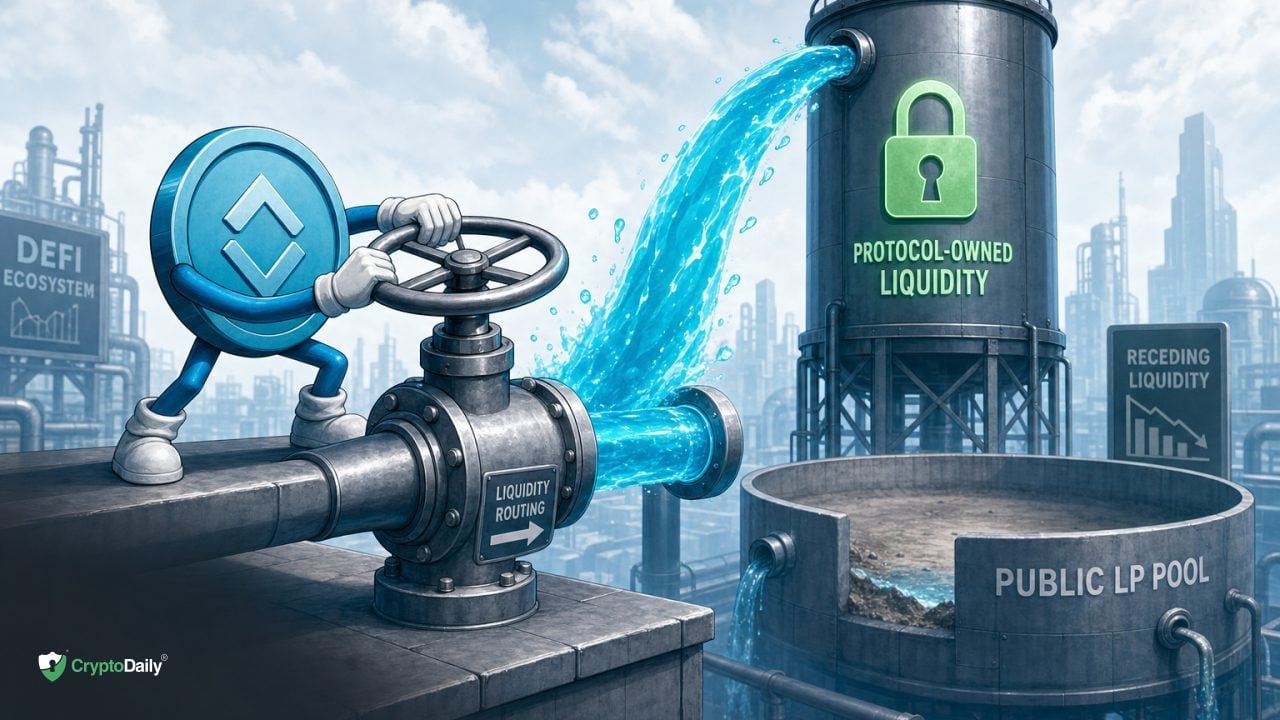
DeFi initiatives are getting bored with paying hire for liquidity. As a substitute of endlessly funding yield farms, extra groups are shopping for and operating their very own LP positions. That shift has a reputation: protocol-owned liquidity.This piece breaks down how POL works in plain language, who it fits, and the trade-offs it is best to weigh earlier than a DAO factors the treasury at a DEX. We’ll discuss construction, budgeting, metrics, and the failure modes folks don’t wish to admit.It issues proper now as a result of large protocols are making actual strikes on-chain to regulate their markets, from stablecoin launches to buyback packages. In the event you steward a treasury or simply care about higher execution, that is for you.Protocol-owned liquidity is when a undertaking makes use of its personal treasury or income to seed and personal its market-making stock on DEXs. As a substitute of renting nameless liquidity with incentives, the protocol deposits property into swimming pools, holds the LP positions, and actively manages depth and charges. Groups do it to chop slippage, scale back ongoing emissions, align incentives, and hold liquidity reside by way of tough markets.
Personal the unfold: hold constant depth the place customers truly commerce
Spend as soon as, handle ceaselessly: decrease long-term price than perpetual farming
Align incentives: protocol advantages from charges and tighter execution
Operational load: wants lively threat and stock administration
How does protocol-owned liquidity truly work?At its core, POL is a undertaking turning into its personal DEX market maker. The DAO or firm funds a pool with treasury property, receives LP tokens (or a place NFT on concentrated AMMs), after which manages that stock to maintain spreads tight and slippage low. Charges generated by buying and selling circulation again to the protocol, offsetting price.There are just a few methods to amass the LP stack. Some protocols merely deploy stablecoins or ETH from the treasury into the bottom pool. Others “bond” by promoting their native token or future rights in trade for LP tokens from the group. A 3rd angle routes a slice of protocol income to purchase and develop LP positions over time.On concentrated liquidity AMMs, POL seems to be like a banded technique: you set ranges across the lively worth, rebalance when markets transfer, and resolve whether or not to run tight bands for low slippage or wider bands to scale back churn. It’s market making, simply absolutely on-chain and normally rules-based.Professional tip: Deal with POL like stock. Measure your mark-to-market PnL, not simply price APR. Charges can flatter your dashboard whereas your stock silently bleeds on large worth strikes.What are the trade-offs versus rented liquidity?POL isn’t a free lunch. You swap recurring emissions for capital in danger and operational complexity. The precise name is dependent upon your token’s maturity, volatility, and the depth you really need for customers to transact with out ruining their worth.Right here’s a fast side-by-side take a look at the frequent choices:
Method
Strengths
Weaknesses
Finest For
Protocol-Owned Liquidity (POL)
Sturdy depth, aligned incentives, price seize
Capital tied up, IL threat, wants lively administration
Stablecoins, core token pairs, mature protocols
Liquidity Mining (Rented)
Bootstraps quick, versatile throughout venues
Ongoing token emissions, mercenary capital churn
New launches, short-term campaigns
Market Maker Settlement
Skilled stock/threat administration
Counterparty threat, charges/retainers, usually off-chain
Centralized trade liquidity, tight spreads
CEX Itemizing Solely
Retail entry, fiat ramps
Restricted on-chain depth, dependency on exchanges
Broad distribution post-launch
In the event you’re overpaying for momentary TVL that vanishes when rewards fade, POL could be cheaper and extra dependable over a full market cycle. In case your token is very unstable or thinly traded, the stock threat may overwhelm price earnings, making rented liquidity or a hybrid method smarter till quantity stabilizes.The place does POL take advantage of sense proper now?Two classes stand out: stablecoins and base pairs on your native token. Stablecoins crave reliable depth as a result of customers anticipate near-zero slippage. And base pairs (like TOKEN/ETH or TOKEN/USDC) outline the complete worth discovery expertise on your group.A concrete instance: in July 2026, Aave governance approved the Aave Finance Committee/MainnetSwapSteward to amass 8 million GHO and deploy DEX liquidity utilizing treasury property, with express USDC and USDT budgets of $10,000,000 every to help GHO launches and runway. That’s a serious protocol selecting to provision on-chain liquidity instantly from its treasury fairly than leaning on short-term farming (Aave Governance (discussion board)).For governance tokens, POL could make sense as soon as the undertaking has regular quantity and a transparent utility loop. Earlier than that, it’s straightforward to tie up capital in stock that doesn’t flip over. Many groups run a blended mannequin: core depth by way of POL on the principle pair, plus time-boxed incentives for long-tail pairs or new chains.How do initiatives fund and construction POL?There are 4 frequent funding routes: direct treasury allocation, bonding (promote the token at a reduction for LP), income redirection (earmark charges into LP), and opportunistic buybacks into LP throughout drawdowns. Your alternative displays threat urge for food and money circulation.We’re seeing extra DAOs redirect income, at the least briefly. On July 3, 2026, Fluid (Instadapp) launched The Fluid Reserve with a structured buyback, directing 100% of Ethereum-mainnet protocol income towards token buybacks in this system’s first month and linking the primary on-chain transaction. That’s a textbook transfer to recycle protocol earnings into market help fairly than fixed exterior incentives (Fluid / Instadapp weblog).Governance ought to set guardrails: measurement the preliminary deployment, outline triggers for rebalancing or pulling liquidity, and decide an execution steward with on-chain transparency. Aave’s method, delegating to a Finance Committee/MainnetSwapSteward, is one mannequin that balances accountability and velocity for on-chain administration (Aave Governance (discussion board)).For concentrated AMMs, doc ranges, auto-compound habits, and stock thresholds. Determine whether or not charges are harvested into the identical pool (to compound) or routed to treasury. Write this down; your future self and your tokenholders will thanks.Will proudly owning your personal LP truly hold spreads tight?Often, sure, in the event you put liquidity the place trades occur and also you rebalance. However depth is about form, not simply measurement. A small quantity in the suitable ticks usually beats a giant, lazy place sitting removed from the lively worth.There’s additionally a helpful datapoint from July 2026: a analysis paper on arXiv reconstructing the Uniswap protocol-fee swap reported a non-detection of huge short-run common adjustments in lively liquidity or native depth after take-rate cuts. In plain English, LPs didn’t stampede out instantly when the protocol’s price share modified, which hints that near-term depth could be resilient to price tweaks in contrast with what folks concern (arXiv (Wen‑Ting Wang)).For POL, that discovering helps a sensible takeaway: execution high quality hinges extra on the place and the way you place liquidity than on shaving protocol-level charges by just a few foundation factors. Monitor your 1% depth, the efficient unfold throughout peak hours, and the way usually orders eat by way of your vary. If the KPIs maintain, customers will really feel it.What can go improper with POL packages?Loads. The 2 greatest dangers are stock drawdowns and governance drift. In case your token swings exhausting, impermanent loss can outpace charges. And if no one is watching the place, your beautiful depth migrates off-price and stops serving to customers.Sensible groups run POL like a threat guide with clear limits. Suppose by way of worst-case situations: in case your token drops 50% over per week, what occurs to stock, and who’s approved to regulate ranges or pause methods?
Outline threat budgets: max stock per asset, max IL tolerance, max every day rebalance gasoline spend
Write runbooks: when to widen ranges, when so as to add collateral, and unwind
Automate alerts: worth strikes, TVL drift from lively vary, price APR collapsing
Phase venues: hold a core pool on mainnet, satellite tv for pc swimming pools on L2s with leaner depth
Use custody hygiene: multisig with {hardware} keys, pausable managers, on-chain reporting
Warning: Don’t chase APR screenshots. If price APR is excessive as a result of your vary is simply too slim and will get churned each hour, web PnL after gasoline and IL should still be damaging.How ought to a DAO measurement and monitor its liquidity?Begin from the consumer journey, not a headline TVL quantity. Map typical commerce sizes and the place they route. If a 50k swap strikes worth 40 bps and your purpose is 10 bps, you possibly can again into the depth required across the lively ticks. Then apply a volatility haircut so ranges don’t fall out of band day by day.For sizing, a sensible heuristic: cowl the eightieth percentile every day swap measurement inside a 30–50 bps band in your major pair. Backtest with final quarter’s realized volatility and your price tier. If the stock flip is simply too low, both tighten the band or admit you’re over-allocating and downsize.Monitor weekly: depth-at-1%, time-weighted unfold, share of quantity your pool captures, realized charges vs. IL estimate, and stock drift. Submit a brief public dashboard or thread so governance can maintain the steward accountable with out micromanaging.Widespread Errors
Chasing TVL as a substitute of execution high quality. Remedy for slippage and routing share, not an arrogance pool measurement.
Ignoring stock threat. Charges are probabilistic; mark positions to market and set IL limits.
Utilizing the improper price tier. If quantity is usually small swaps, a decrease price can elevate routing share and web PnL.
By no means rebalancing ranges. Stale positions drift off-price and cease serving customers.
One-venue tunnel imaginative and prescient. Unfold core depth and at the least a skinny backstop to the highest chain the place customers reside.
No exit rule. Outline circumstances to unwind or scale back POL if KPIs deteriorate for a number of weeks.
In order for you ongoing protection, market construction explainers, and sensible information tales, we publish them commonly at Crypto Every day.Ceaselessly Requested QuestionsCan POL work on concentrated liquidity AMMs like Uniswap v3 and Algebra?Sure. You run worth bands fairly than a single 50/50 place. The playbook is choosing a major vary across the lively worth, then a wider backup vary that catches large strikes. Automate alerts or use a supervisor to rebalance when worth exits the band.Does operating POL make a token a safety or create authorized points?Proudly owning LP is market infrastructure, not a promise of revenue to others by itself. That mentioned, legal guidelines fluctuate by jurisdiction. Most groups deal with POL as treasury administration and keep away from forward-looking statements about token worth. Get counsel; don’t wing it.Is bonding nonetheless related in 2026?It may be, particularly for protocols with out large stables or ETH in treasury. Bonding sells future rights or tokens for LP at a reduction, letting the undertaking accumulate liquidity with out rapid money. Simply mannequin dilution and guarantee vesting so that you don’t create prompt sellers.How can we account for impermanent loss on the books?Deal with it like stock PnL. Mark LP to market utilizing oracle or TWAP costs, observe charges realized, and estimate IL based mostly on worth strikes relative to deposit. Over longer home windows, evaluate realized charges to IL and execution advantages for customers. If IL dominates, resize or swap bands.What about cross-chain liquidity if our customers break up throughout L2s?Run a hub-and-spoke. Maintain deep core liquidity on the chain with most quantity, and seed thinner utility swimming pools on secondary chains. Think about bridging incentives or a routing associate to attach venues, however keep away from fragmenting depth a lot that no pool works properly.Ought to a DAO lend LP tokens to an expert market maker?Generally. A hybrid mannequin can work: the DAO owns the stock, whereas an MM manages ranges underneath a clear mandate and shares efficiency reviews. Set clawbacks and limits; custody threat rises when roles blur.What occurs throughout a black swan transfer?Predefine “circuit breaker” guidelines. Widen ranges, cap new provides, and if wanted, pull a part of the liquidity to treasury to cease bleeding. Talk rapidly. Markets forgive losses; they don’t forgive silence and chaos.
Disclaimer: This text is supplied for informational functions solely. It's not provided or meant for use as authorized, tax, funding, monetary, or different recommendation.